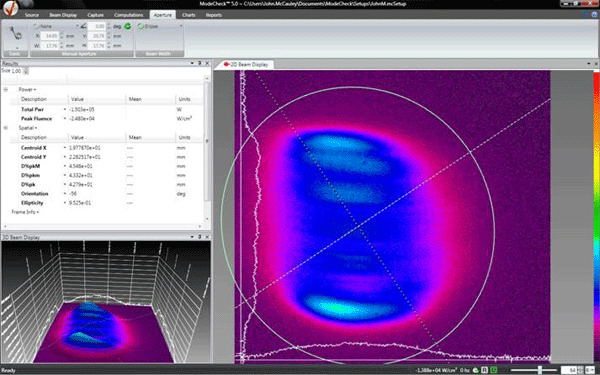
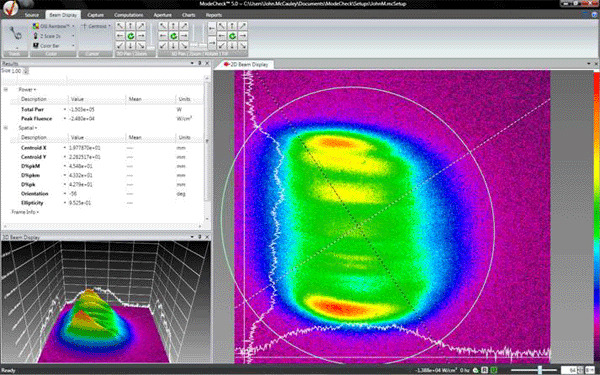
Beam Profile of 10kW CO2 Laser
We started by taking a power reading with the 10 kW sensor and a Juno USB Interface to a local PC. This particular sensor had a damaged spot on the thermopile element, so I’m not sure it was giving us an accurate reading. However, here were the recorded power readings:
Author:
John McCauley, Midwest Sales Engineer, Ophir-Spiricon, LLC
| Laser Setting | Reading |
|---|---|
| 3.9 kW | 3.9 kW |
| 6.9 kW | 7.4 kW |
| 8.5 kW | 9.4 kW |
This particular laser is used for testing electronic components for their customers, so the beam quality wasn’t of too much concern.
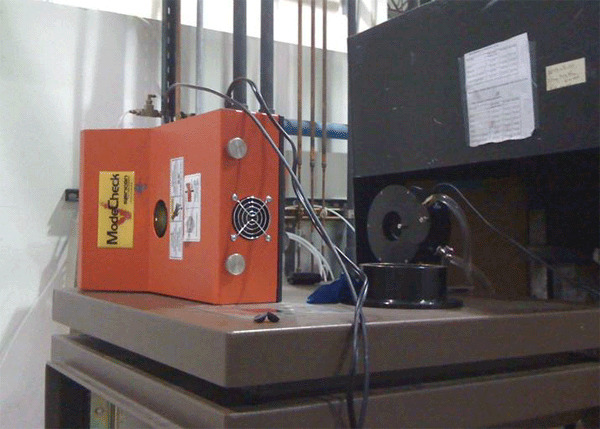
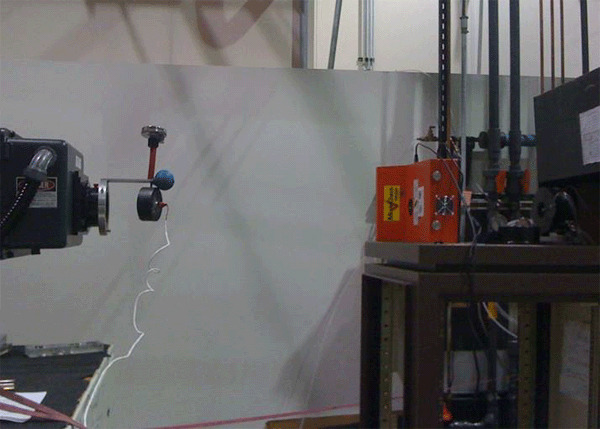
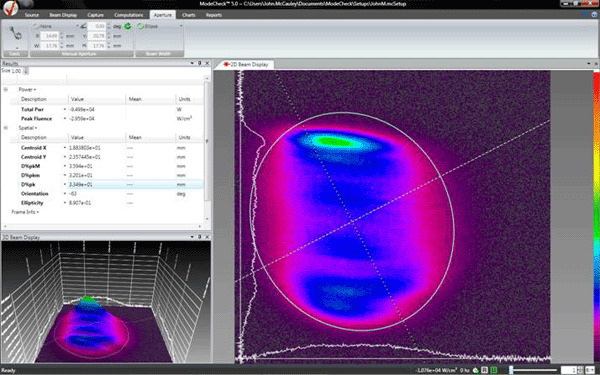
The ModeCheck beam analyzer comes with four different sampling wands that will sample the input beam and is chosen based on the amount of expected average power at the time of measurement versus the expected size of the beam diameter. Since the ModeCheck is officially only rated for a maximum average power of 5kW, this ModeCheck was fitted with a 0.5% sampling wand (the wand of lowest value). At the 8.9kW laser setting, we measured a 43mm diameter beam. With this wand, we did not achieve a full range of Z-scale. We probably could have sampled the beam with a 1% wand, but with this setup, it was very time-consuming to align, so we didn’t change it.
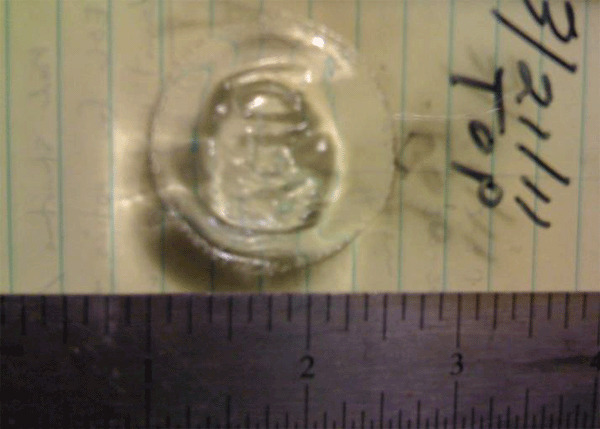
The laser technician was able to do a real-time alignment of the output coupler, which he was very impressed with being able to do. They currently use a Primes beam profiler and acrylic mode burns to achieve this, which is relatively time-consuming. They were also impressed with the ability to scroll back through captured data to see the results.