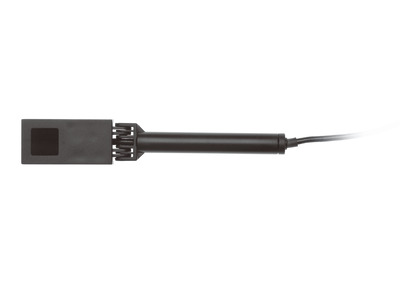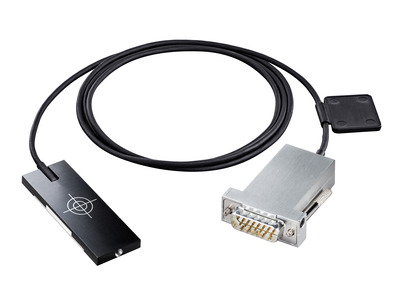
Mikroskop-Objektträger-Leistungssensor
Mikroskop-Objektträger-Leistungssensor
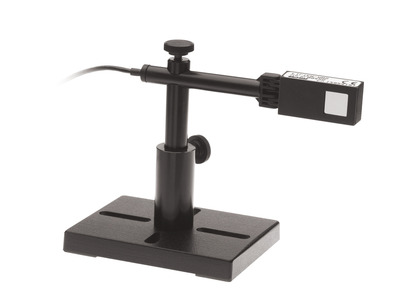
Der PD300-MS Objektträger-Sensor misst die Leistung auf der Probenebene eines Mikroskops. Die Silizium- Photodiode misst Wellenlängen von 350 nm bis 1100 nm bei optischen Leistungen zwischen 3µW bis 1W. Der Sensor hat mit 76x25,2 mm die gleichen Abmessungen wie ein Standard-Objektträger. Die Sensorfläche ist versiegelt, so dass der Sensor in Immersionsmedien wie Wasser oder Glyzerin ebenso verwendet werden kann wie in Luft.
- Messung der optischen Intensität nach dem Mikroskopobjektiv
- Geringe Winkelabhängigkeit für Objektive mit hohem N.A.
- Kann mit Luft-, Wasser- oder Ölimmersionsobjektiven verwendet werden Alle Funktionen anzeigen

Spezifikationen
- Aperture Size18 x 18 mm
- MaterialSilicon
- Spectral Range350-1100 nm
- Power Range3 μW to 1 W
- Maximum Average Power Density20 W/cm²
- Response Time0.2 s
- Cable Length1.5 m
- Dimensions76 x 25 x 2.5 mm (LxWxD)
- CE ComplianceYes
- UKCA ComplianceYes
- China RoHS ComplianceYes
Funktionen
Microscope Slide Power Meter Overview
The PD300-MS Microscope Slide Power Meter lets you accurately measure the exact amount of light applied to a specimen, so experimental results across different equipment can be objectively compared.
Measuring Very Low Laser Powers with a Photodiode Sensor
In this short “Basics” video, we review in general the use of photodiode sensors for measuring very low laser powers.
Häufig gestellte Fragen
- Do I need to recalibrate my instrument? How often must it be recalibrated?Antwort
Unless otherwise indicated, Ophir sensors and meters should be recalibrated within 18 months after initial purchase, and then once a year after that.
- How can I measure light coming out of an oil immersion objective?Antwort
This is easy with the PD300-MS all you need to do is place a drop of oil on the center of the sensor surface and immerse the objective lens in it. After measurement just wipe down the sensor and clean it for another use.
- The area of the sensor is large, can I measure light at any point on it?Antwort
The sensor is large in order to 'catch' light coming out of the objective at large angles, it is most accurate when the light is centered on the surface – you should use the target on the backside of the sensor to position the sensor optimally.
Ressourcen
Data Sheets
Catalogs
Power Sensors Catalog(11.2 MB, PDF) Laser Power & Energy Measurement and Laser Beam Analysis Catalog(27.5 MB, PDF)
Drawings & CAD
PD300-MS Drawing(215.1 kB, PDF)
Tutorials
PD300-MS User Notes(230.3 kB, PDF) Introduction to Laser Power Sensors
Technical Notes
5 Situations Where Laser Performance Measurement is Necessary Effect of Ambient Conditions on Laser Measurements How to Properly Select a Laser Power or Energy Sensor