
Sprache
Sicherer Checkout

FPD-VIS-300
FPD-VIS-300
Der FPD-VIS-300 ist ein schneller optischer Detektor zur Visualisierung und Messung der temporalen Charakteristiken von Laserstrahlen im Spektralbereich von 320 bis 1100nm. Er arbeitet mit einer Silizium PIN-Photodiode und ist dafür ausgelegt, optische in elektrische Signale zu wandeln, die dann mit einem zusätzlichen Messgerät wie einem Oszilloskop oder einem Spektralanalysator gemessen werden. Der FPD-VIS-300 hat eine Anstiegszeit von 300 psec. Seine Vorspannung wird entweder durch interne Batterien erzeugt.
- Silicon photodiode for 320-1100 nm spectral range
- Fast 300 ps rise time
- 0.4 mm diameter active area
- Optional attenuators and fiber optic adapters Alle Funktionen anzeigen

Spezifikationen
- Product NameFPD-VIS-300
- Sensor TypeSilicon
- Rise Time/Fall Time<300 ps
- Spectral Range320-1100 nm
- Active Area Diameter0.4 mm
- Noise Equivalent Power<0.01 pW/√Hz
- Detector Area0.13 mm²
- Wavelength of Peak Sensitivity770 nm
- Responsivity at Peak Wavelength0.5 A/W
- Responsivity (Irradiance) at Peak Wavelength31 x 10⁻³ V/(W/cm²)
- Bias Voltage9 VDC
- Bias Voltage SourceBatteries
- Bandwidth>1.2 GHz
- Dark Current<0.1 nA
- Maximum Average Power25 mW
- Mounting (Tapped Holes)8-32 & M4
- Output ConnectorBNC
- Accessory ThreadM20x1
- Dimensions54 x 34 x 40 mm (LxWxD)
- CE ComplianceYes
- UKCA ComplianceYes
- China RoHS ComplianceYes
Funktionen
Pulse Characterization Sensor Overview
Using these Ophir fast photodetectors, you can see and measure the temporal characteristics of pulsed and CW laser beams.
Fast Photodiode Spectral Responsivity
Responsivity is defined as the produced photocurrent (in Amperes) per Watt of incident radiation. It is a function of wavelength. Hence, the spectral response of the photodiode should be as high as possible at the wavelength of the laser to be measured. The spectral responsivities of the FPD series are shown in the figure. Ophir offers several fast photodiodes models with Silicon photodiodes having spectral response from 320 nm to 1100 nm, UV enhanced Silicon with extended response from 193 nm to 1100 nm, and InGaAs photodiodes which are sensitive from 900 nm to 1700 nm.

Häufig gestellte Fragen
- What kind of measurements can I do with a temporal detector? Why are they important?Antwort
With a temporal detector you can measure the rise time, fall time, pulse duration and pulse frequency. Many laser applications use pulsed laser, for example medical lasers, LIDARs, and high power fiber laser for metal processing to name a few. The parameters of the laser pulses are critical for the performance of the application.
- Do I need to recalibrate my instrument?Antwort
Ophir's temporal sensors do not require calibration.
- I need to measure the temporal pulse shape of a very powerful laser. How can I do that without damaging the detector?Antwort
There are several possible ways to do this:
- Use a beam sampling optic (partially reflective mirror or uncoated window).
- Feed the laser beam into an integrating sphere and attach the temporal detector to the sphere using the adapter accessory.
- Use a beam dump and position the detector such that it picks up some of the reflected laser radiation.
Attenuating accessories are available (see temporal detector's product page). Laser power density on the attenuators should be less than 50 W/cm².
- The temporal sensor can provide accurate measurement of temporal parameters. How can I relate those to absolute value of pulse energy?Antwort
Pulse energy can be measured directly using one of Ophir's calibrated energy sensors. Another way is to use a calibrated power sensor and calculate the pulse energy using:
Pulse energy [J] = average power [W] / pulse rate [pulses per second]
Temporal sensors provide a signal that is proportional to the instantaneous power output of the laser. When viewing the pulse waveform on an oscilloscope, the integrated area under the curve is proportional to the total pulse energy.
- I don’t see my signal on the oscilloscope or the signal is not as expected. What should I do?Antwort
See the troubleshooting section of the user manual in the temporal detector's product page for detailed information.
- In the specifications of the “Pulse Characterization Sensors”, Noise Equivalent Power is specified in units of “√Hz”. What does that mean”?Antwort
Admittedly a unit such as “√ Hz” is not very intuitive. In general: Noise Equivalent Power (NEP) is defined as the signal power that gives a signal-to-noise ratio of 1 in a one-hertz output bandwidth. Taking the bandwidth of the measurement into account is where the “square root of Hz” comes in. The noise spectrum typically has a relatively flat response, and the noise level changes with the square root of the frequency range. For example, if the frequency range doubles, the noise component increases by √2 (1.414). In detector datasheets, the bandwidth is typically normalized to 1 Hz (which is usually far below the detection bandwidth), to allow detectors with different bandwidth specifications to be directly compared.
- I sometimes need to see an analog representation of my laser power on a scope, in parallel to measuring it with a thermal sensor. What solutions are available?Antwort
There are a number of options, depending on the purpose.
- In many cases, the simplest solution could be to make use of the analog output of the meter – that gives a voltage signal proportional to the actual reading (it is in fact just a D/A translation of what is being displayed), so it represents a fully calibrated reading. The full scale value is a function of the meter being used and the power range it is on.
- The "SH to BNC connector" (Ophir P/N
) simply takes the raw output from the detector element and sends it to the scope. It bypasses the sensor's EEROM which contains the calibration data, so it essentially turns the sensor into an uncalibrated "dumb" analog sensor. It should be noted, though, that in some cases we could be talking about a signal to the scope that may be low, perhaps even near the noise level of the scope, which limits the usefulness of this method at low powers. - If the need is to see the pulse width – the temporal profile – the solution (assuming applicable specs) is to use an appropriate temporal sensor connected to a scope. You can point it anywhere where it will catch some backscatter from your laser, and you'll see the pulse temporal form as it really is.
- What is the difference between calibrated power sensors such as PD300 and temporal sensors?Antwort
Calibrated power sensorsmeasure the average power of CW and pulsed laser beams. The sensor is connected to an Ophir Meter or PC Interface. Power sensors are optimized for low noise and linear response in order to maximize power measurement accuracy. The measured laser beam must be smaller than the sensor's aperture in order to obtain an accurate power measurement. Temporal sensors are optimized for high speed response in order to reproduce pulse temporal characteristics with high fidelity. A temporal sensor is usually smaller than the laser beam size and samples a portion of the beam. The temporal sensor is connected to a scope or spectrum analyzer to display temporal characteristics of pulsed lasers.
Zubehör
Attenuators
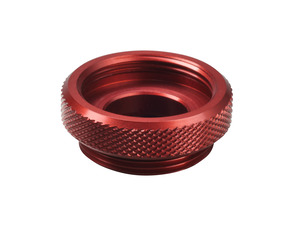

FPD to IS6 Adapter
For mounting FPD sensor series (except FPS-1) to North Pole post of IS6 series.
| Compare | Description | Drawings, CAD & Specs | Avail. | Price | ||
|---|---|---|---|---|---|---|
 | 7Z08350FPD (except FPS-1) to IS6 adapterFPD Sensor Adapter, IS6 Integrating Sphere, North Pole Port, Matte Black Coated | Auf Lager |
Fiber Connector Adapters
These adapters allow for power measurement of connectorized fiber-optic cables. The sensor may need an additional mounting bracket to connect to these fiber adapters.
| Compare | Description | Drawings, CAD & Specs | Avail. | Price | ||
|---|---|---|---|---|---|---|
 | 7Z08227SC Fiber Connector Adapter, Power and Energy Sensors | |||||
 | 7Z08226ST Fiber Connector Adapter, Power and Energy Sensors | Auf Lager | ||||
 | 7Z08229FC Fiber Connector Adapter, Power and Energy Sensors | Auf Lager | ||||
 | 1G01236ASMA Fiber Connector Adapter, Power and Energy Sensors | Auf Lager |
Extended Warranty for Sensor
Customers that purchase the above items also consider the following items. Ophir-Spiricon meters and sensors include a standard manufacturers warranty for one year. Add a one year Extended Warranty to your meter or sensor, which includes one recalibration.
| Compare | Description | Drawings, CAD & Specs | Avail. | Price | ||
|---|---|---|---|---|---|---|
 | XWAR-SENSORErweiterte Garantie für Sensoren |
Ressourcen
Data Sheets
Fast Photodiode Detectors (FPD) Datasheet(448.2 kB, PDF)
Drawings & CAD
FPD-VIS-300 Drawing(179.9 kB, PDF)
Manuals
FPD-IG-175/FPD-UV-3000/FPD-UV-3000-JP/FPD-VIS-300 User Manual(598.3 kB, PDF) FPD-VIS-300 Quick Reference(54.3 kB, PDF)
Catalogs
Pulse Characterization Sensors Catalog(2.6 MB, PDF) Laser Power & Energy Measurement and Laser Beam Analysis Catalog(27.5 MB, PDF)
Technical Articles
Pulsed Lasers: How to Choose the Right Fast Photodetector Ophir Power/Energy Meter Calibration Procedure and Traceability/Error Analysis Laser Measurements in Materials Processing
Technical Notes



Sie haben Fragen? Oder benötigen Unterstützung?
Klicken Sie unten, um das Ophir Photonics Team zu kontaktieren. Wir melden uns in Kürze bei Ihnen.
Ophir Photonics kontaktieren