Laser measurement is not just a lab exercise. In many applications, it is the difference between a process that is controlled and repeatable and one that depends too much on assumptions.
A laser data sheet may say that a source produces a specific power or pulse energy. That information is useful, but it is not the same as measuring the laser inside the real system, under real operating conditions. In a medical system, a manufacturing process, a scientific setup, or an industrial production line, the question is not only what the laser is designed to produce. The question is what it is actually delivering to the process.
That is why laser measurement begins with a few core terms: energy, average power, peak power, energy density, and power density. Understanding these terms helps users choose the right measurement method, avoid damaging sensors, and interpret measurement results correctly.
Energy: the amount delivered in a pulse
For laser measurement, energy can be thought of as a fixed quantity of capacity to do “work” (in the physics sense) delivered by a pulse. A common unit is the joule. One joule is the energy needed to raise the temperature of roughly a quarter of a gram of water by one degree Celsius.
If a pulsed laser produces a sequence of pulses, each pulse may contain the same amount of energy, or the energy may vary from pulse to pulse. In some applications, the energy of each individual pulse matters, in which case pulse energy is the (or at least a) parameter of interest.
Power: the rate at which energy flows
Power is different. Power is the rate at which energy is delivered over time. One watt equals one joule per second.
This applies to a pulsed beam as well as to a CW beam. If a laser produces one pulse per second, and each pulse contains one joule of energy, the average power is one watt. (Note that if a beam is continuous rather than pulsed, we can only speak about power; we cannot speak about a fixed amount of energy, since there is only a continuous flow.)
Peak power: what happens inside the pulse
Peak power refers to the instantaneous power during the pulse. It is not the same as average power.
Consider a laser that produces one pulse per second, with each pulse containing one joule of energy. Its average power is one joule per second, or one watt. But if each pulse lasts only one millisecond, then during that millisecond the laser is delivering one joule per millisecond. That equals one kilowatt of “peak power” during the pulse.
The same laser can therefore have:
– 1 joule per pulse
– 1 watt average power
– 1 kilowatt peak power during the pulse
This distinction may sound simple, but it prevents a great deal of confusion. A pulsed laser can have modest average power while still producing very high power during each pulse.
These are not interchangeable measurements. Each tells a different part of the story.
Energy density and power density
Energy and power also need to be understood in relation to area.
Energy density is the amount of energy incident on a surface per unit area, often expressed in joules per square centimeter. Power density is the amount of power incident on a surface per unit area, often expressed in watts per square centimeter.
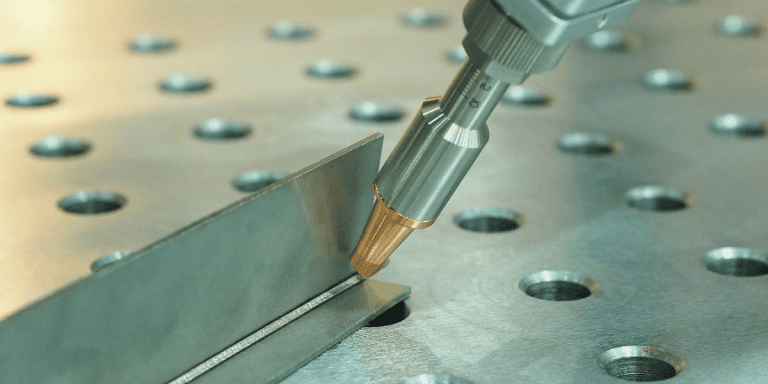
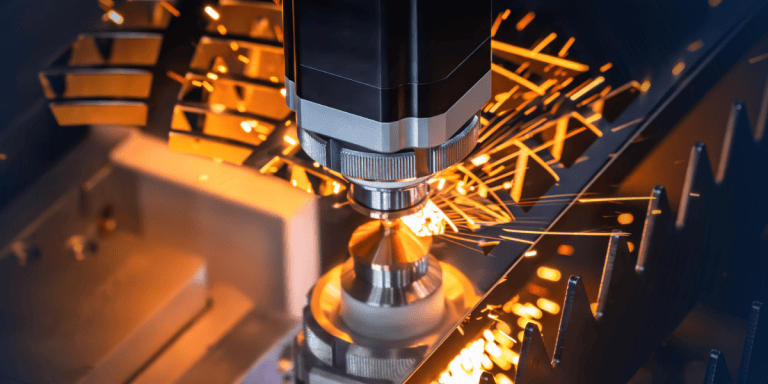
This matters because laser processes often depend on concentrating energy or power into a small spot. Cutting, drilling, marking, welding, and other industrial processes may intentionally focus a large amount of laser energy into a small area to affect a material.
That same principle can damage a measurement sensor. A beam that is designed to drill through metal can also damage the absorber surface of a sensor if it is measured at the focal point. The total number of joules may be the same whether the beam is measured in focus or slightly out of focus, but the energy density at the sensor surface can be dramatically different.
In practice, this means that a sensor should often be positioned outside the focal plane, unless the measurement specifically requires the focused spot and the sensor is designed for that condition.
Damage threshold: the limit that protects the sensor
Every sensor material has a damage threshold. This is the maximum energy density or power density the sensor can handle before damage may occur.
There are two important types of limits:
– Energy density damage threshold: too many joules per square centimeter (even if pulses arrive slowly such that there are not too many watts per square centimeter)
– Power density damage threshold: too many watts per square centimeter
A single pulse can damage a sensor if it is focused into too small an area; so can a moderate-power CW beam if it focused into too small an area.
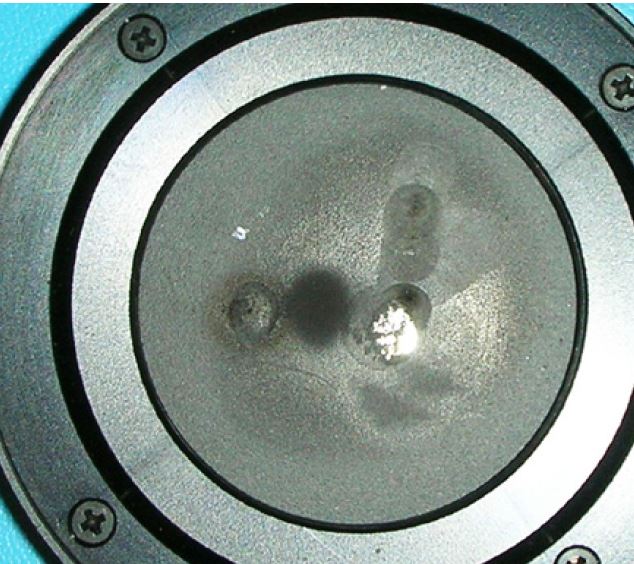
Although it may be trivial, it should be mentioned: A beam with simply too high average power for the given sensor design can also damage a sensor – if the heat cannot be dissipated quickly enough, the temperature inside the sensor will increase until eventually the sensor will fail. We don’t normally refer to that as “Damage Threshold” – it’s just plain damage.
That is why the measurement question is never only “How many watts?” or “How many joules?” It is also “Over what area?” and “Under what exposure conditions?”
Why these definitions matter when choosing a sensor?
The right laser measurement sensor depends on what needs to be measured:
– Average power
– Energy per pulse
– Peak power
– Single-shot energy
– Energy per pulse in a repetitive pulse train
– Beam position or size
– Irradiance or dosage in LED applications
It also depends on the laser wavelength, power level, pulse length, repetition rate, beam size, and expected power or energy density at the sensor.
Choosing a sensor based on only one number can lead to a sensor that does not work for the application or, worse, gets damaged during use. A complete measurement definition is the first step toward a reliable measurement.
Final thought
Laser measurement is about control. A system may be designed around a laser source, but the actual output still needs to be verified. Whether the application is medical, industrial, scientific, or production-based, measuring the beam helps users understand what is really happening at the point where the laser interacts with the process.
When users understand the difference between energy, power, peak power, and density, they are better equipped to choose the right measurement approach and use it correctly.