When designing or upgrading a laser measurement system, it’s easy to focus on selecting the right sensor. However, the interface that connects the sensor to your computer plays an equally important role in how efficiently you collect, analyze, and manage measurement data.
Modern laser measurement applications often require more than a simple numerical readout. Engineers may need to record data, monitor multiple sensors simultaneously, automate measurements, or integrate measurement systems into laboratory software or industrial equipment. Choosing the right interface helps streamline these tasks while improving flexibility and productivity.
This article explores the most common PC interfaces for laser power and energy measurement, including USB, Ethernet, Bluetooth®, and RS-232, and explains which applications each interface is best suited for.
Watch the Video Overview
If you prefer a quick visual introduction, watch the short video below before exploring the detailed explanations in this article.
▶️ https://youtu.be/-NwjbCHvS-0
The sections below expand on the concepts presented in the video, providing additional guidance to help you choose the right interface for your laser measurement application.
The Three Components of Every Laser Measurement System
Every laser measurement system consists of three primary components:
- A laser power or energy sensor that detects the laser output
- Signal processing electronics that convert the sensor signal into measurement data
- A display or software interface that presents, records, and analyzes the results
Traditional handheld power meters combine the signal processing electronics and display into a single instrument. Virtual laser meters separate these functions by moving the display and analysis capabilities to a computer running dedicated software.
This approach offers greater flexibility while enabling advanced features such as data logging, graphing, statistical analysis, and integration with automated systems.
Why Choose a PC-Based Laser Measurement System?
PC-based laser measurement systems provide capabilities that extend well beyond displaying measurement values.
Depending on the interface and software used, users can:
- Monitor measurements in real time
- Record and export measurement data
- Analyze trends and statistics
- Generate graphs and reports
- Control multiple sensors simultaneously
- Integrate measurements into automated production systems
- Develop custom software using available APIs
For research laboratories, production facilities, and OEM developers, these capabilities often improve efficiency while reducing manual work.
USB Interfaces: Simple, Reliable, and Versatile
USB remains the most widely used interface for laser measurement because it offers fast setup, broad compatibility, and reliable performance.
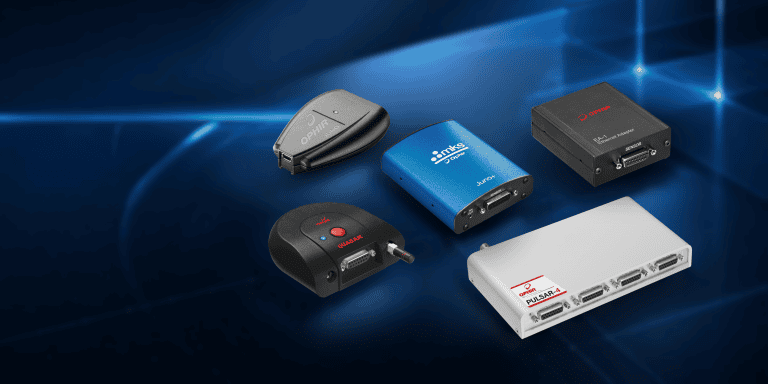
Ophir offers several USB-based virtual meter solutions that support different measurement requirements.
Juno
The Juno provides a compact, single-channel interface for compatible laser power and energy sensors. Its small size and straightforward USB connection make it an excellent choice for everyday laboratory measurements and educational environments.
Juno+
The Juno+ expands these capabilities by supporting both thermopile and pyroelectric sensors while maintaining the convenience of a USB connection. It is well suited for users requiring greater measurement flexibility without increasing system complexity.
Pulsar
Applications involving multiple laser beams or simultaneous measurements benefit from the Pulsar, a four-channel virtual meter that enables users to monitor several sensors from a single interface.
Typical applications include:
- Multi-beam laser systems
- Manufacturing quality control
- Comparative sensor testing
- Automated measurement stations
Ethernet Interfaces for Industrial Automation
Industrial environments often require laser measurement systems to operate remotely or integrate with existing factory networks.
The EA-1 Ethernet Adapter enables compatible Ophir sensors to communicate over Ethernet, making it easier to deploy measurement systems across larger facilities.
Ethernet connectivity provides several advantages:
- Long-distance communication
- Remote monitoring
- Network accessibility
- Easy integration with industrial automation systems
- Flexible installation options
These features make Ethernet particularly valuable for manufacturing environments and continuous process monitoring.
Wireless Measurements with Bluetooth®
In some applications, minimizing cables is just as important as obtaining accurate measurements.
The Quasar combines signal processing electronics with Bluetooth connectivity, allowing measurements to be viewed wirelessly on a computer or compatible mobile device.
Wireless operation can simplify installations where cable routing is difficult while providing greater flexibility for portable measurement applications.
Supporting Legacy Systems with RS-232
Although USB and Ethernet dominate modern measurement systems, many industrial and OEM applications still rely on RS-232 communication.
Maintaining RS-232 compatibility allows engineers to integrate new measurement hardware into existing equipment without redesigning legacy control systems.
Serial communication also remains useful during proof-of-concept development and custom OEM software integration.
Choosing the Right Interface
The best interface depends on your application requirements, installation environment, and system architecture.
| Interface | Best Applications | Key Benefits |
| USB | Laboratory measurements | Simple setup, reliable performance, broad compatibility |
| Ethernet | Industrial automation | Remote monitoring, network integration, long-distance communication |
| Bluetooth | Portable or difficult-to-access installations | Wireless flexibility and simplified installation |
| RS-232 | Legacy equipment and OEM development | Compatibility with existing systems and straightforward integration |
Selecting the appropriate interface not only improves day-to-day operation but also ensures your measurement system can adapt to future requirements.
Software Completes the Measurement System
Hardware is only part of an effective laser measurement solution.
Ophir’s StarLab® software transforms compatible virtual meters into powerful measurement platforms by providing:
- Real-time measurement displays
- Data logging
- Graphing and visualization
- Statistical analysis
- Sensor configuration
- Data export
- Support for multiple connected devices
For developers, available APIs enable seamless integration of laser measurements into custom software and automated workflows.
Conclusion
Choosing the right laser measurement interface is about more than simply connecting a sensor to a computer. The interface determines how measurement data is collected, analyzed, stored, and integrated into your workflow.
Whether your application requires the simplicity of USB, the networking capabilities of Ethernet, the flexibility of Bluetooth, or compatibility with legacy RS-232 systems, selecting the appropriate interface helps maximize both measurement efficiency and long-term system value.
By understanding the strengths of each communication option, engineers can build laser measurement systems that meet today’s needs while remaining flexible for future applications.
Looking for the best interface for your laser measurement application?
Explore Ophir’s complete portfolio of virtual meters, interfaces, and laser sensors, or contact our application specialists to discuss the solution that best fits your requirements.