
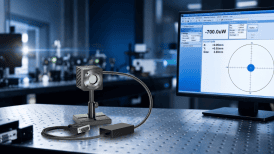
When Laser Power Looks Right, What Could You Be Missing?
A laser power reading can tell you how much power is being measured. But does it tell you whether the […]
When Laser Power Looks Right, What Could You Be Missing? Read Post »
A laser power reading can tell you how much power is being measured. But does it tell you whether the […]
When Laser Power Looks Right, What Could You Be Missing? Read Post »
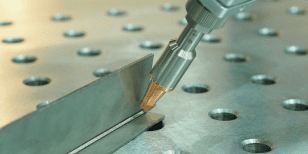
Two laser welding systems can produce dramatically different weld quality even when both pass daily power checks. The answer often lies not in laser power, but in power density and beam characteristics.
Why Laser Welders with the Same Power Produce Different Results Read Post »

Power from Pulse™ enables accurate short-burst high-power laser measurement by calculating average power from measured energy and exposure time. The technique helps reduce sensor heating, supports short measurement windows, and accounts for laser rise-time effects in demanding high-power applications.
Power from Pulse™: A New Standard for Measuring Short-Burst High-Power Lasers Read Post »

When low-power laser measurements vary between ranges, the problem may not be the sensor or meter. In this case study, a raster-scanned beam created a low-frequency pulsing signal that interfered with standard power measurement. Here’s how Low Frequency Power mode helped provide stable, accurate results.
Case Study: Solving Inconsistent Low-Power Laser Measurements from a Pulsing Beam Read Post »

Modern industrial and directed energy laser systems require reliable measurement at extremely high power levels. See how the Ophir 70K-W sensor enables continuous measurement up to 70 kW and short-exposure measurement up to 100 kW.
Measuring Ultra-High Laser Power Up to 100 kW with the Ophir 70K-W Sensor Read Post »

When aligning a complex optomechanical system, small adjustments can affect beam power, position, and stability at the same time. BeamTrack sensors, combined with StarLab software, help users monitor these changes in one workflow for faster alignment and troubleshooting.
Watch: Beam Pointing Stability Measurement Made Easy with BeamTrack and StarLab Read Post »

Why does a laser power meter show negative readings? Learn common causes and simple fixes for accurate laser measurements.
Laser Power Meter Negative Reading: Why It Happens and How to Fix It? Read Post »

Measure laser power above 100 kW with water‑cooled calorimetric sensors that safely absorb energy and calculate power via temperature and flow enabling accurate, low‑reflection measurements for ultra‑high‑power lasers.
Measuring Laser Power Above 100 kW? How Is It Done? Read Post »

Selecting the right instrument for industrial high‑power laser measurement is critical for stable cutting and welding processes. This article outlines key challenges and requirements, and introduces the Ophir IPM modular laser power sensor designed for harsh production environments.
Choosing the Right Instrument for Industrial High‑Power Laser Measurement Read Post »

Discover Ophir’s PD300R‑UV‑193 and PD10‑C‑193 sensors engineered for accurate UV laser power and pulse energy measurement (193–400 nm), with durable, UV‑hardened design for reliable testing.
Introducing The New UV Sensors: PD300R-UV-193 and PD10-C-193 Read Post »

Measuring high‑power lasers accurately is not trivial. This article explores common challenges in high‑power laser measurement and shares practical solutions to prevent sensor damage and maintain reliable results.
High Power Laser Measurement: Challenges and Solutions Read Post »

Explore the rise of high‑power laser weapons and the critical role of precise measurement in ensuring beam stability, safety, and performance in modern directed energy defense systems.