Industrial laser systems are reaching higher power levels than ever before. At trade shows and on production floors, systems in the tens of kilowatts are no longer unusual, and manufacturers are pushing for faster cutting, faster welding, and greater consistency across demanding applications.
But as laser power increases, one question becomes more important:
How much useful energy is actually reaching the workpiece?
That is where power density becomes critical.
What Power Density Means in High-Power Laser Processing
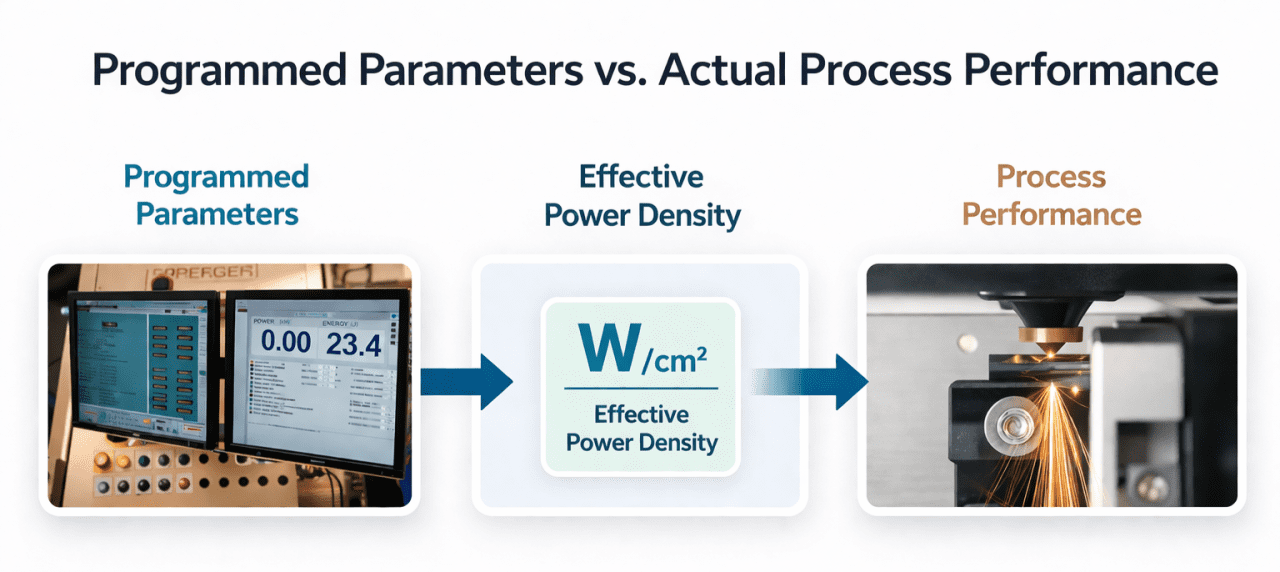
Laser systems are often described by output power: 4 kW, 12 kW, 30 kW, and beyond. But in real-world processing, nominal power alone does not determine results.
What matters is the amount of laser power delivered to a given area at the point of interaction with the material. In other words, what matters is power density.
A system may be programmed to deliver a certain power level, but changes in beam size, focus position, or energy distribution can significantly affect the actual power density at the workpiece. When that happens, process performance can change even though the laser’s set power appears unchanged.
That is why manufacturers focused on process quality cannot rely on source power alone. They need visibility into how the beam is behaving where it matters most.
Why Higher Laser Power Increases Sensitivity to Beam Changes
Higher-power systems can deliver major gains in throughput and capability. They can support faster cutting and welding speeds, improved performance in thicker materials, and more demanding industrial applications.
At the same time, higher-power systems can also become more sensitive to relatively small changes in the optical path.
Over time, several factors can affect beam delivery:
- contamination on optics
- thermal effects in optical components
- changes in spot size
- focus shift
- beam instability during operation
Any of these can reduce the effective power density reaching the workpiece. The result may be inconsistent welds, reduced cut quality, changing process performance, or troubleshooting that takes longer than it should.
In high-power applications, small beam changes can have large process consequences.
Why Laser Power Alone Does Not Explain Process Performance
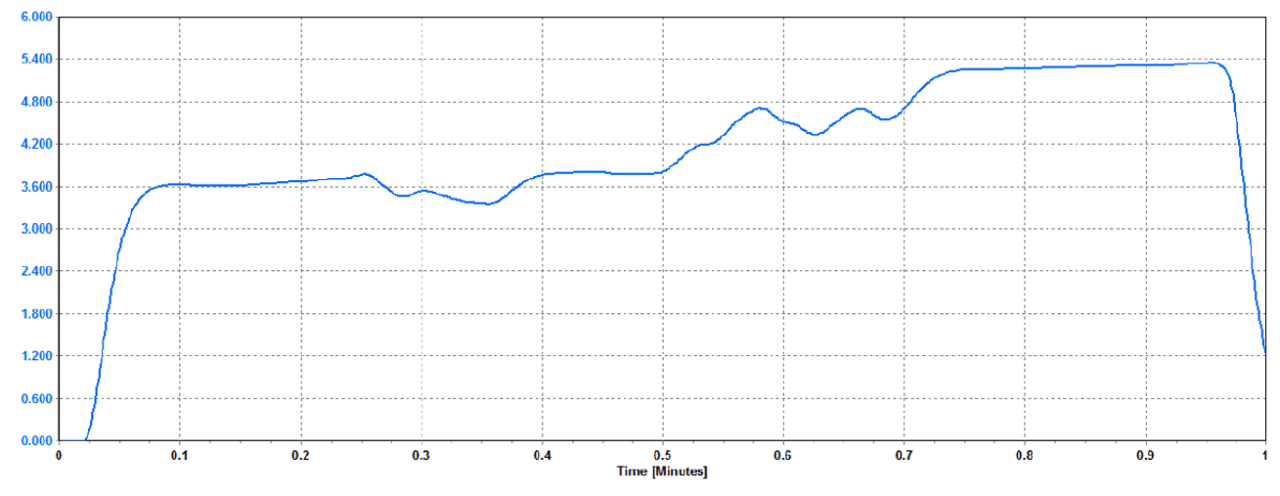
This is one of the key challenges in high-power laser processing: a laser can appear to be operating normally while the process itself is already drifting.
If the beam profile changes, the focus moves, or the spot size grows, the workpiece may receive less effective energy concentration than expected. In practical terms, that means process quality may decline even when the laser source power seems acceptable.
For engineers and manufacturers, this makes beam characterization and power verification increasingly important. Without measurement, it can be difficult to understand whether a problem originates in the laser source, the beam delivery path, the optics, or the process setup itself.
How Can Manufacturers Monitor Process Health in High-Power Laser Applications?
As systems become more powerful, measurement becomes an important part of process control and troubleshooting. Different tools can help answer different questions.
Laser Power Verification for High-Power Manufacturing Systems
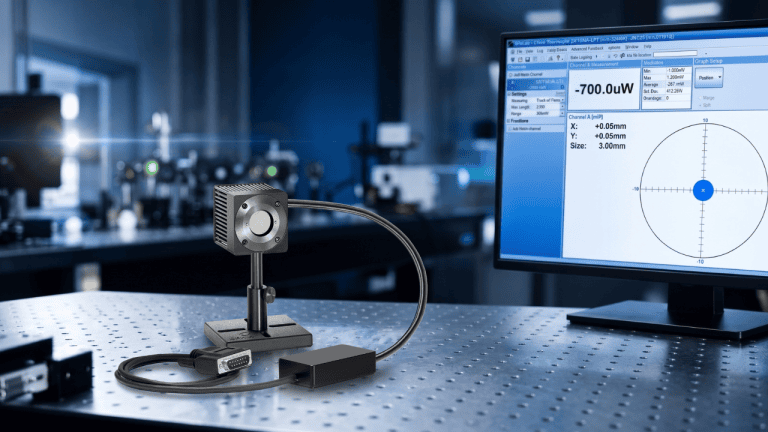
A power meter can help confirm whether the system is delivering the expected level of output. This is useful for routine health checks, maintenance, and identifying drift before it affects production.
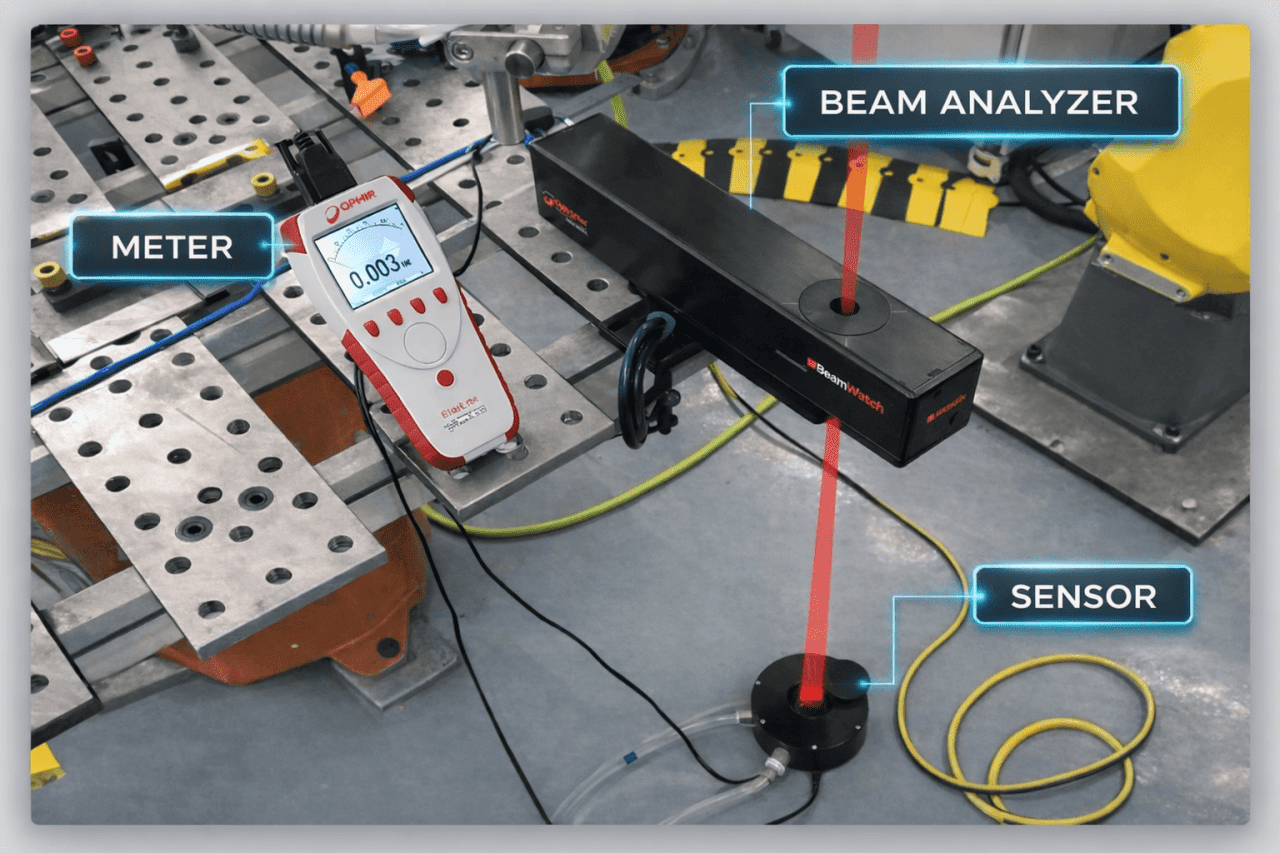
For manufacturing environments, power verification can help answer a basic but essential question:
Is the system delivering the power you think it is?
Fast Laser Power Measurement in High-Power Production Environments
In some cases, manufacturers need a practical way to measure high-power systems without adding complexity to the setup. A pulse-to-power approach can provide a fast snapshot of delivered power and support regular verification in production-oriented environments.
This can be especially valuable when teams want a quick, repeatable way to monitor laser behavior over time.
Beam Profiling and Focus Analysis for Power Density Control
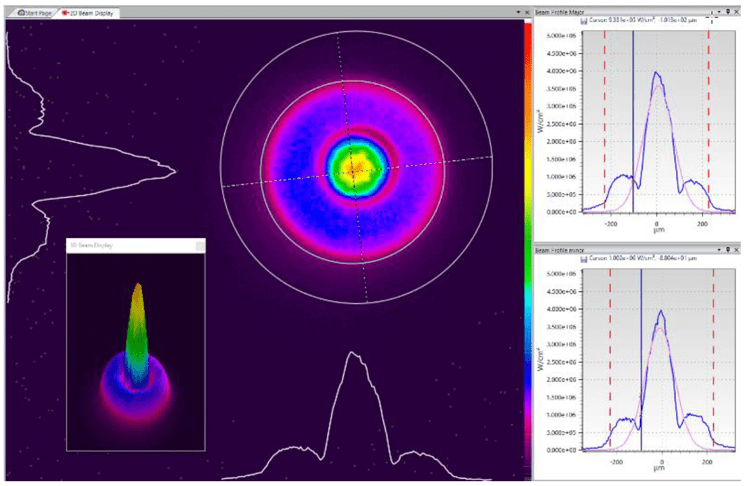
Power measurement is only part of the picture. To understand power density, manufacturers also need insight into beam size, beam shape, and focus behavior.
Beam profiling tools can reveal issues that are not visible through power measurement alone, including:
- beam shape changes
- shifts in spot size
- focus drift
- instability over time
- changes in energy distribution
This is often where hidden process problems become visible. A system may still be generating substantial power, but if the beam is no longer properly focused or distributed, process performance can suffer.
Why Regular Laser Measurement Improves Process Consistency
Laser systems are dynamic. Their behavior can change as they run, as optics age, and as thermal conditions evolve. In high-power applications, those changes can have a direct effect on quality, consistency, and uptime.
Monitoring power density-related factors helps manufacturers:
- improve process consistency
- reduce scrap and rework
- shorten troubleshooting time
- catch drift earlier
- support more predictable production
As laser power levels continue to increase, measurement is becoming less of an occasional diagnostic step and more of a practical part of maintaining process quality.
Power Density Is Key to Consistent High-Power Laser Processing
In high-power laser processing, more power does not automatically mean better results.
What matters is how effectively that power is delivered to the workpiece, consistently and predictably. That is why power density is such an important concept for modern laser manufacturing—and why measuring power, beam behavior, and focus performance is essential to keeping processes healthy over time.