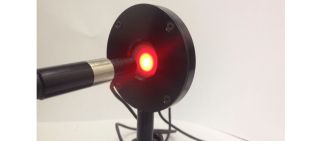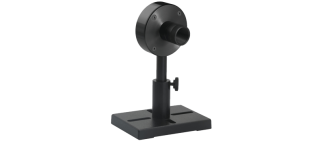
Imaging UV light with CCD Cameras
Want to profile your UV laser with a Silicon CCD camera?
Read this first.
Imaging UV light with CCD Cameras Read Post »
Want to profile your UV laser with a Silicon CCD camera?
Read this first.
Imaging UV light with CCD Cameras Read Post »
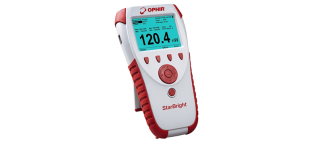
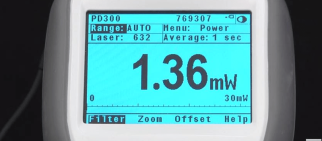
The new Ophir StarBright is the most advanced of Ophir’s family of handheld laser meters. This video walks you through the range of capabilities, and shows you how to use them.
How to Use the StarBright Laser Power Meter Read Post »
Lasers are famous for their focusability. (As in: “laser-focus.”)
That’s why many laser power sensors have 30, 20, or even just 10 mm apertures. This is usually more than enough space for a laser beam.
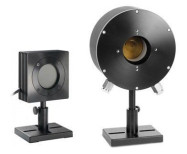
But what about large lasers like diode stacks or non-laser light sources? How can a small sensor measure a large laser beam?
A Power Meter for Large Lasers and Light Sources Read Post »
Broadband spectral sources, such as arc lamps or gas-discharge lamps are still used in many lighting applications due to their high efficiency and other unique characteristics.
Lasers are measured with laser power meters. But how can you measure a broadband spectral light source?
How to Measure Broadband Spectral Sources Read Post »
The new Ophir StarBright is the most advanced of Ophir’s family of handheld laser meters. This video walks you through the range of capabilities, and shows you how to use them.
Product Feature: How to Use the StarBright Meter Read Post »
Pyroelectric sensors are the tool of choice for measuring energy of repetitively pulsed laser beams.
They measure energy, and they’re fast.
They are not, however, indestructible.
4 Quickest Ways to Damage Your Pyro Sensor Read Post »
I’ve mentioned BeamWatch before.
It’s an innovative technique for profiling high power lasers (1 kW and up).
I’ve even touched on the underlying Rayleigh scattering effect that makes this possible.
But how does this really work?
Non-Contact Beam Profiling of 100 kW and Above: How Can This Work? Read Post »
Disclaimer: Don’t do anything stupid.
What I’m about to tell you is a trick that should NOT be used lightly.
However, in many cases Ophir sensors can be used for far higher powers than in the spec, as long as it’s only for a short time exposure.
How To Use a 50 W Sensor to Measure 8 kW Lasers Read Post »
It can be frustrating – trying to measure the power of a laser beam whose power keeps changing. In this video, part of our “Best Practices in Laser Measurement” series, you’ll learn how to get good readings even for unstable beams.
Best Practices in Laser Measurement: How to Measure an Unstable Laser Read Post »
Learn when to use thin lens vs Gaussian formulas for accurate laser beam focusing, spot size, and Rayleigh length optimization.
Focusing a Gaussian Laser Beam: Which Formula to Use? Read Post »
We’re all agreed that pyro sensors fill in an important gap in laser power and energy measurement.
Now that you have your pyroelectric sensor, here are some tips to get the most accurate measurement possible.
5 Rules to Get Accurate Laser Energy Measurements with a Pyroelectric Sensor Read Post »
CCD camera beam profilers are very sensitive to light.
So what happens when we consider ambient light? How about other light sources in the area, such as laser pumps?
There are two issues that can be caused by unwanted light getting into the camera:
How Stray Light Affects Laser Beam Profiling Read Post »