
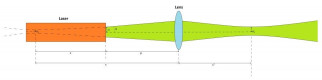
Focusing a Gaussian Laser Beam: Which Formula to Use?
Learn when to use thin lens vs Gaussian formulas for accurate laser beam focusing, spot size, and Rayleigh length optimization.
Focusing a Gaussian Laser Beam: Which Formula to Use? Read Post »
Learn when to use thin lens vs Gaussian formulas for accurate laser beam focusing, spot size, and Rayleigh length optimization.
Focusing a Gaussian Laser Beam: Which Formula to Use? Read Post »
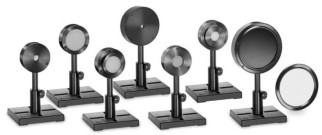
We’re all agreed that pyro sensors fill in an important gap in laser power and energy measurement.
Now that you have your pyroelectric sensor, here are some tips to get the most accurate measurement possible.
5 Rules to Get Accurate Laser Energy Measurements with a Pyroelectric Sensor Read Post »

CCD camera beam profilers are very sensitive to light.
So what happens when we consider ambient light? How about other light sources in the area, such as laser pumps?
There are two issues that can be caused by unwanted light getting into the camera:
How Stray Light Affects Laser Beam Profiling Read Post »
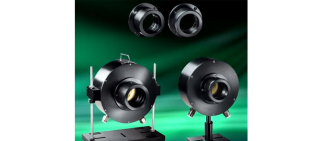
When measuring very high power laser beams, even the few percent of the beam normally back-scattered from the sensor can be a problem. Ophir now offers Scatter Shields as accessories for our high power laser sensors; these can be mounted on the front flange of the sensors to reduce the backscatter by about 70%.
Scatter Shields: Reducing Back-Reflected Power from High Power Sensors Read Post »
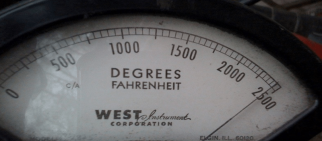
Thermal sensors measure heat.
Lasers heat up these sensors, which is what we want.
But after the laser is turned off, the sensor might still be hot. (Especially true for high powers, long exposure.)
Does this mean the sensor will still show a reading? Should it be zeroed?
Measuring Laser Power with a Thermal Sensor: What Happens When the Sensor Heats Up? Read Post »
With all the advancements in laser technology, lasers have become higher quality and more consistent.
Laser manufacturers test and measure their lasers during development, to make sure you, the laser end user, get the highest quality laser system.
With all this in mind then, do you really have to measure your laser system?
Must You Measure Industrial Laser Performance? Read Post »
Not everyone knows this, but almost all Ophir power and energy sensors can be used with four standard fiber adapters:
SMA
FC
ST
SC
Of course, any fiber can be measured by an Ophir sensor by taking a free-space measurement – placing the fiber tip a few mm or cm from the sensor and letting the laser beam continue to the sensor.
However, in many cases it is convenient to use a fiber adapter to connect to a measuring device.
If that’s the case, here’s what you’ll want to do.
How to Measure Optical Fiber Power and Energy Read Post »

You medical laser needs periodic measurement to ensure it continues to operate at the desired output settings.
There are two ways to measure the internal laser of your medical device:
Hulk: large, thermal sensor to absorb the full laser power.
Spiderman: small sensor to sample the beam in-process.
As you might expect, each method comes with advantages and disadvantages.
How Should You Measure Your Medical Laser:Hulk-Style or Spiderman-Style? Read Post »

What are the four things you need to know when selecting a laser beam profiling system? Learn from Ophir-Spiricon’s sales engineers – the experts in the field of measuring lasers – what you need to know to get the most out of your laser beam.
Factors to Consider When Choosing a Laser Beam Profiling System Read Post »

If your application involves a laser which is not always on the target, such as the following setup, you might need a beam dump. Consider this: The deflectable mirror is used to direct the laser to its intended target
Laser Beam Dumps: The Safe Way to Trap High Power Lasers Read Post »
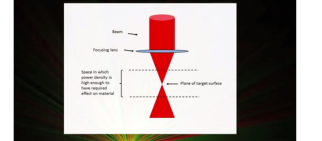
Modern production facilities must constantly increase throughput, at less cost, with less scrap, and with minimum downtime. In this video overview, you will learn how application of new, advanced technology in measurement devices, can help both designers and users of industrial laser systems to optimize and control their processes, so they can accomplish these goals and achieve consistently good results – both in quality and quantity.
Laser Measurement Solutions for High Power Industrial Laser Applications Read Post »
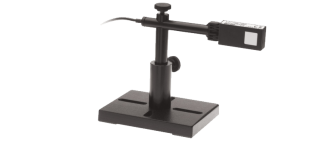
There are a few different ways to measures laser power, but the most common is the photodiode. Photodiodes translate light energy into electricity (current), which can be measured by a current sensor.
Ophir uses a few types of photodiodes in its PD300 series.
How to Measure Low Power Lasers (Picowatts to Watts) Read Post »