
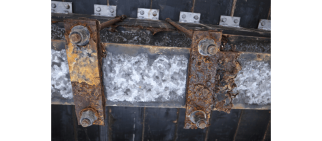
Avoid Corrosion in Water-Cooled Sensors
Measuring power of high power lasers means things are going to get hot. That’s why most high power laser sensors […]
Avoid Corrosion in Water-Cooled Sensors Read Post »
Measuring power of high power lasers means things are going to get hot. That’s why most high power laser sensors […]
Avoid Corrosion in Water-Cooled Sensors Read Post »
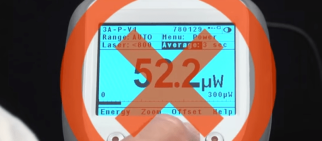
You might think – as I used do – that offset is pretty simple.
Before measuring your laser, see if the meter displays a value.
If not, great. If it does, that’s unwanted, so press “Offset.”
However, the truth is there are several different kinds of offset and it’s important to understand a little bit about how thermal sensors work in order to know when to hit that offset button and when to resist.
When to use Thermal Offset in Laser Power Measurement Read Post »
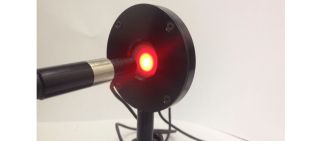
LED’s are used today in many applications with the most prominent being the lighting of our homes, streets and businesses. Despite their clear advantages, measurement techniques of the power, flux and spectrum of LEDs is not very different from that of traditional types of lamps.
White Paper: Measuring LED Power with Thermal Sensors Read Post »

The 3A family of laser power sensors is one of our most popular – and for good reason.
You might already know the basic points:
It’s very sensitive (down to 10 μW), yet comes with all the benefits of a thermal-based sensor: high damage threshold and spectrally flat across a very wide spectral range.
The Most Versatile Sensors for Very Low Power Lasers Read Post »
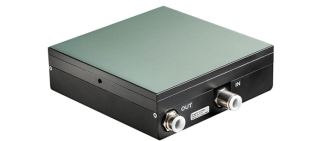
Lasers are famous for their focusability. (As in: “laser-focus.”)
That’s why many laser power sensors have 30, 20, or even just 10 mm apertures. This is usually more than enough space for a laser beam.
But what about large lasers like diode stacks or non-laser light sources? How can a small sensor measure a large laser beam?
A Power Meter for Large Lasers and Light Sources Read Post »
Broadband spectral sources, such as arc lamps or gas-discharge lamps are still used in many lighting applications due to their high efficiency and other unique characteristics.
Lasers are measured with laser power meters. But how can you measure a broadband spectral light source?
How to Measure Broadband Spectral Sources Read Post »
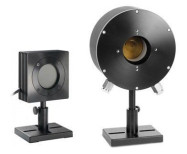
Disclaimer: Don’t do anything stupid.
What I’m about to tell you is a trick that should NOT be used lightly.
However, in many cases Ophir sensors can be used for far higher powers than in the spec, as long as it’s only for a short time exposure.
How To Use a 50 W Sensor to Measure 8 kW Lasers Read Post »
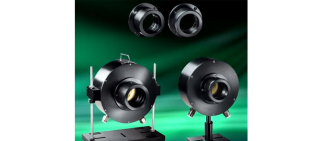
When measuring very high power laser beams, even the few percent of the beam normally back-scattered from the sensor can be a problem. Ophir now offers Scatter Shields as accessories for our high power laser sensors; these can be mounted on the front flange of the sensors to reduce the backscatter by about 70%.
Scatter Shields: Reducing Back-Reflected Power from High Power Sensors Read Post »
Thermal sensors measure heat.
Lasers heat up these sensors, which is what we want.
But after the laser is turned off, the sensor might still be hot. (Especially true for high powers, long exposure.)
Does this mean the sensor will still show a reading? Should it be zeroed?
Measuring Laser Power with a Thermal Sensor:What Happens When the Sensor Heats Up? Read Post »
Not everyone knows this, but almost all Ophir power and energy sensors can be used with four standard fiber adapters:
SMA
FC
ST
SC
Of course, any fiber can be measured by an Ophir sensor by taking a free-space measurement – placing the fiber tip a few mm or cm from the sensor and letting the laser beam continue to the sensor.
However, in many cases it is convenient to use a fiber adapter to connect to a measuring device.
If that’s the case, here’s what you’ll want to do.
How to Measure Optical Fiber Power and Energy Read Post »

If your application involves a laser which is not always on the target, such as the following setup, you might need a beam dump. Consider this: The deflectable mirror is used to direct the laser to its intended target
Laser Beam Dumps: The Safe Way to Trap High Power Lasers Read Post »
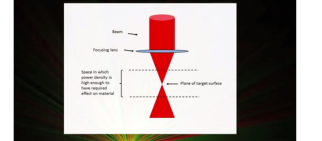
Modern production facilities must constantly increase throughput, at less cost, with less scrap, and with minimum downtime. In this video overview, you will learn how application of new, advanced technology in measurement devices, can help both designers and users of industrial laser systems to optimize and control their processes, so they can accomplish these goals and achieve consistently good results – both in quality and quantity.
Laser Measurement Solutions for High Power Industrial Laser Applications Read Post »