
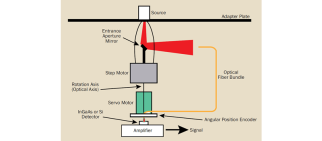
How to Profile Extremely Small Lasers: Two Ways
Lasers that are focused very small (< 10 μm) are challenging to profile. This is usually too small to be resolved […]
How to Profile Extremely Small Lasers: Two Ways Read Post »
Lasers that are focused very small (< 10 μm) are challenging to profile. This is usually too small to be resolved […]
How to Profile Extremely Small Lasers: Two Ways Read Post »
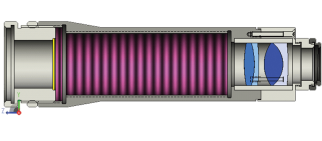
Getting the beam size and profile of a UV laser is not trivial. The typical beam profiling solution of a
Beam Profiling and Resizing of UV Lasers Read Post »
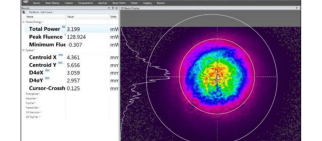
Lasers used in labs must be measured. However, there are usually many constraints, even besides the obvious one (money):
University Research Team Faces Challenges of Measuring Multiple Lasers Read Post »
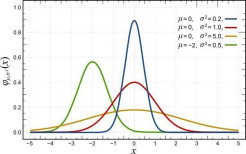
Brush up on your laser physics with our new glossary. Find out different ways to define beam width, mode, Rayleigh
Laser Beam Measurement Vocabulary Read Post »
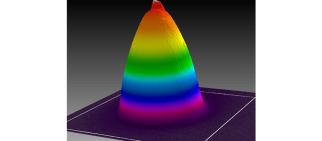
We talk a lot here about lasers.
How to measure laser power, energy, size, and distribution profile. How to avoid damage from lasers. Etc., etc.
But what about other light sources?
Measuring Profiles of Non-Laser Light Sources Read Post »
For every wavelength of laser along the electromagnetic spectrum, Ophir-Spiricon can measure the output. This video briefly introduces the equipment used in the different regions of the spectrum to measure and profile lasers.
The Full Spectrum of Laser Measurement [video] Read Post »
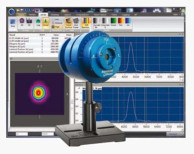
When it comes to profiling your laser beam, there are quite a few questions to consider. Accuracy, functions, cost, etc.
Measuring Pulsed Lasers with a Scanning-Slit Profiler Read Post »
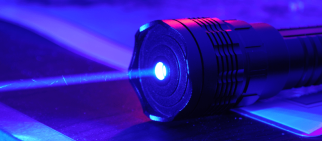
Want to profile your UV laser with a Silicon CCD camera?
Read this first.
Imaging UV light with CCD Cameras Read Post »
I’ve mentioned BeamWatch before.
It’s an innovative technique for profiling high power lasers (1 kW and up).
I’ve even touched on the underlying Rayleigh scattering effect that makes this possible.
But how does this really work?
Non-Contact Beam Profiling of 100 kW and Above: How Can This Work? Read Post »

CCD camera beam profilers are very sensitive to light.
So what happens when we consider ambient light? How about other light sources in the area, such as laser pumps?
There are two issues that can be caused by unwanted light getting into the camera:
How Stray Light Affects Laser Beam Profiling Read Post »
What are the four things you need to know when selecting a laser beam profiling system? Learn from Ophir-Spiricon’s sales engineers – the experts in the field of measuring lasers – what you need to know to get the most out of your laser beam.
Factors to Consider When Choosing a Laser Beam Profiling System Read Post »
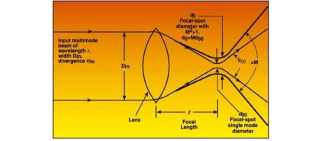
What’s M-Squared, again?
If you’re not familiar with M2 already, it basically sums up your laser beam quality in a single number.
M2 takes a look at your beam caustic (the curve of the laser beam as it focuses and diverges again) and compares this to an ideal Gaussian beam caustic.
So if your beam is perfectly Gaussian, you’ll get M2 = 1. For high quality beams, M2 might be 1.1 or 1.2, for lower qualities you can get up to 3, 4 and even double digits for some low quality high power lasers.
So, how do you know what the M2 of your laser beam really is?
Q&A: M-Squared Laser Beam Quality Read Post »