Meet the Team: Mark Slutzki, Our Product Manager, Reveals How He Manages to Keep Up on the Latest Developments in Laser & Photonic Measurements
In this week’s blog post we’re excited to introduce you to Mark Slutzki, our experienced product Manager
Lasers can be divided into many categories based on their principle of operation, wavelength, and output powers; here we will
Measurement of Excimer Lasers Read Post »
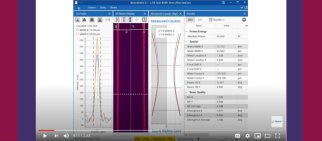
This video offers quick introductions to Ophir-Spiricon laser beam profiling products for additive manufacturing, high-power lasers using CCD cameras or non-contact measurement devices, BeamGage camera based profiling, no attenuation slit-based profilers and the Pyrocam camera measuring 13nm to 3000 microns.
Watch: Ophir Spiricon Pyrocam Product Tour Read Post »
Lasers are used for many different applications and come in a large variety of powers and parameters, so it wouldn’t be fair (or logical) to require the same sort of safety measures for industrial laser welders as laser pointers or barcode scanners.
Laser Safety Measurement Read Post »
When asking the SLM manufacturers and users about what they need to know about the laser beam, the first answer
Troubleshooting in SLM (Selective Laser Melting) systems with BeamWatch & BeamWatch AM Read Post »
In order to improve quality of SLM systems and incease efficiency and maximize machnie and resourse utilization, maintaining proper laser parameters is essential.
There are many specifications used to define optical components, such as lenses, mirrors,
windows, etc. Some, like focal length, might seem obvious. Others, like power
and centration, might not be as self-explanatory.
Here is an incomplete glossary of some of the most commonly used specifications for
optics.
Glossary of Optical Specifications Read Post »
Let’s be honest.
We’d all just prefer that our lasers always worked exactly as they’re supposed to.
Who really wants to measure their laser, when they can just be using it instead?
However, like all processes, a laser must be controlled to be used efficiently, and it must be measured to be controlled (and used) properly.
A Beginner’s Guide to Laser Beam Profiling Read Post »
In case you haven’t got the chance to come across it yet, the BeamSquared® system is a compact and fully
Watch: BeamSquared Auto ISO Read Post »
At Ophir, we are always focused on helping you ensure best results from your laser, by monitoring its power, energy, beam shape, and more.
Linearity describes how accurately a laser power or energy sensor responds across its measurement range. This article explains what it is and why it matters.
There are many ways to measure laser output: You can use a photodiode, thermopile, or pyroelectric sensor. This post will
How It Works: Measuring Laser Power with a Thermal Sensor Read Post »