

How to Measure Extremely Low Power Lasers (pW, fW)
If you looked at the Ophir catalog a year or two ago, you could quickly get a sense for the […]
How to Measure Extremely Low Power Lasers (pW, fW) Read Post »
If you looked at the Ophir catalog a year or two ago, you could quickly get a sense for the […]
How to Measure Extremely Low Power Lasers (pW, fW) Read Post »

To measure laser power (or energy), you need two things: Sensor to physically convert the laser to an electrical signal
Find a Sensor for Your Laser Power Meter Read Post »
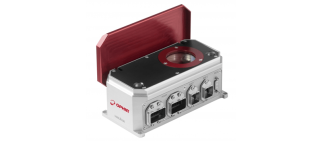
“You can do Profinet, right?”
John had just ordered 10 laser welding stations for his new car manufacturing facility. As a laser system integrator, you talked to him in detail about all the specs. What exactly does he need from the laser? What sort of control equipment does he have? What else does he need?
John added, almost as an afterthought – “The facility is in Germany, so of course we want all the lasers and devices running on Profinet. You can do that, right?”
Uh-oh.
Laser Monitoring in Your Factory Line – with Profinet Read Post »
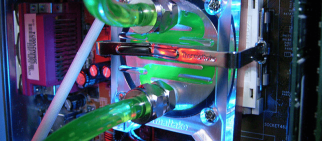
Water-cooled sensors are used for measuring high power lasers. Here’s a short guide on selecting the right chiller. Three things
Chiller Requirements for High Power Meters Read Post »

There are several considerations when you’re trying to maximize laser power meter accuracy. One that I don’t usually mention is
How to Center Your Laser Beam for More Accurate Power Measurement Read Post »

Finding a laser power meter and sensor to measure power is pretty simple. (Ophir’s meters and PC interfaces are plug-and-play,
Measure a Wider Range of Laser Powers Read Post »
For humans, good hygiene is a key to maintaining good health. Same with laser sensors! This video will give you
How to Keep Your Laser Power Meter Sensor Clean Read Post »
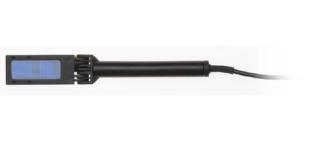
Measuring the power of scanning lasers such as barcode scanners presents a problem. A bar code laser beam scans back and forth at a very high frequency so an ordinary photodiode power meter will not measure the power in the beam but rather the average power impinging on it, i.e. the power times the fraction of time the beam is on the detector. Therefore, when exposed to a scanned beam, the reading will be much lower than the actual power in the beam. For example, if a scanning laser delivers 2mW to a photodiode sensor and the beam is on the sensor only 1% of the time, the instrument will read only 0.02 mW.
How to measure a Barcode scanning laser? [Updated] Read Post »
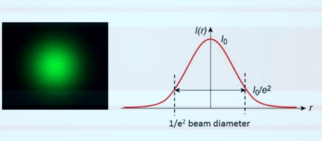
For maximum accuracy, how much of the sensor’s aperture should the beam ideally fill? This video will give you some
Laser Measurement Best Practices: How much of my sensor’s aperture should I fill? Read Post »
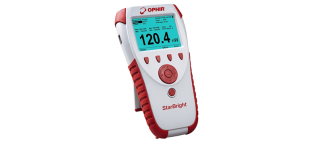
A few months ago, I mentioned a new method for measuring kilowatt lasers without water (or even fan) cooling.
The idea was like this: Even a small 50 W sensor can handle high powers for a short amount of time, like a few seconds. Several of our sensors’ specifications were adjusted to reflect this.
For example, the L40(150)A is meant to measure 40 W continuously, but it can actually measure 4000 W for a second.
“Power from Pulse” – How to Measure High Power Lasers with Small Sensors Read Post »
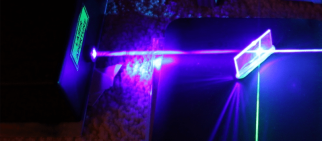
Sometimes a laser is used in a “pass-through” setup, which begs the question: What happens to the laser after it passes through?
Consider for example a sensitive camera that is used to profile a laser. Beam splitters are often used to deflect only a small percent of the laser intensity into the camera. The other 90% or more passes straight through the splitter.
How to Trap More Than 99.9% of a Laser Beam Read Post »
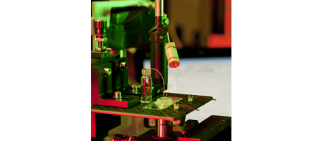
Picture this:
You’re working on a complicated laser setup, with various beam splitters, attenuation, lenses and mirrors. You spend weeks optimizing the design, and months waiting for all the parts to arrive.
Now everything is here and you set it up to the millimeter.
And then the big moment. Where’s the laser?
Optical Alignment: A Simple Solution to an Infuriating Problem Read Post »