How to Measure Laser Exposure/Dosage
Usually, I talk about measuring power or energy.
Today I want to discuss exposure – total energy deposited over time.
How to Measure Laser Exposure/Dosage Read Post »
Recent updates and news in the world of power and energy measurements
Usually, I talk about measuring power or energy.
Today I want to discuss exposure – total energy deposited over time.
How to Measure Laser Exposure/Dosage Read Post »
A few months ago, I mentioned a new method for measuring kilowatt lasers without water (or even fan) cooling.
The idea was like this: Even a small 50 W sensor can handle high powers for a short amount of time, like a few seconds. Several of our sensors’ specifications were adjusted to reflect this.
For example, the L40(150)A is meant to measure 40 W continuously, but it can actually measure 4000 W for a second.
“Power from Pulse” – How to Measure High Power Lasers with Small Sensors Read Post »
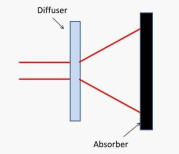
Sometimes a laser is used in a “pass-through” setup, which begs the question: What happens to the laser after it passes through?
Consider for example a sensitive camera that is used to profile a laser. Beam splitters are often used to deflect only a small percent of the laser intensity into the camera. The other 90% or more passes straight through the splitter.
How to Trap More Than 99.9% of a Laser Beam Read Post »
Glad you asked.
Like many answers to many questions, the answer here is “sometimes yes, sometimes no.”
To explain this, we must look at each of the three main types of laser power/energy sensors:
Can You Measure Laser Power with the Sensor on an Angle? Read Post »
For every wavelength of laser along the electromagnetic spectrum, Ophir-Spiricon can measure the output. This video briefly introduces the equipment used in the different regions of the spectrum to measure and profile lasers.
The Full Spectrum of Laser Measurement [video] Read Post »
In order to measure your laser, you need two things:
Thing One: A sensor, to convert photonic power into an electrical signal.
Thing Two: A meter, to measure the electrical signal, digitize it, and display the results.
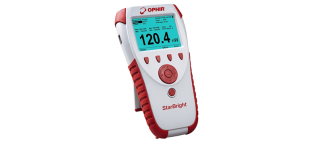
StarBright: Advanced, Yet Easy-to-Use Laser Power Meter Read Post »
Some people prefer to use a PC to display their laser measurements. Some use a power meter.
But if you are a service technician and find yourself lugging equipment from one site to the next, this might be your saving grace.
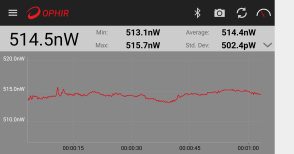
Ophir recently released an Android app called StarViewer.
Measure Laser Power on Your Android Phone Read Post »
Picture this:
You’re working on a complicated laser setup, with various beam splitters, attenuation, lenses and mirrors. You spend weeks optimizing the design, and months waiting for all the parts to arrive.
Now everything is here and you set it up to the millimeter.
And then the big moment. Where’s the laser?
Optical Alignment: A Simple Solution to an Infuriating Problem Read Post »
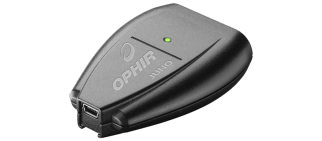
You need a sensor (thermal, photodiode, pyroelectric) to measure laser power, but how do you take that raw measurement signal and move it to a display. You have a few options, and in this post will explore the benefits of Juno – as well as the cases when other options would be preferred.
Juno: No-Hassle Laser Measurement (On Your PC or Tablet) Read Post »
Measuring power of high power lasers means things are going to get hot. That’s why most high power laser sensors
Avoid Corrosion in Water-Cooled Sensors Read Post »
You might think – as I used do – that offset is pretty simple.
Before measuring your laser, see if the meter displays a value.
If not, great. If it does, that’s unwanted, so press “Offset.”
However, the truth is there are several different kinds of offset and it’s important to understand a little bit about how thermal sensors work in order to know when to hit that offset button and when to resist.
When to use Thermal Offset in Laser Power Measurement Read Post »
Updated March 2016: I made a few changes to this post now that the new low power RM9-PD is available.
There are many different types of lasers.[citation needed]
UV, visible, infrared, Terahertz.
Nanowatts, milliwatts, kilowatts.
Lasers for industry, laser for medicine, lasers for telecommunication.
How to Measure Very Low Power Infrared Lasers[Update] And femtowatt lasers! Read Post »