Challenges and Opportunities of UV Disinfection
The COVID-19 pandemic has put a spotlight on disinfection technology. UV radiation is a promising approach to prevent airborne infections […]
Challenges and Opportunities of UV Disinfection Read Post »
The COVID-19 pandemic has put a spotlight on disinfection technology. UV radiation is a promising approach to prevent airborne infections […]
Challenges and Opportunities of UV Disinfection Read Post »
The world remains in a continuing state of uncertainty due to the new COVID-19 coronavirus. Face masks and disinfectants are selling very well. Disinfection with UV light could offer a way of disinfecting larger areas without the use of chemical disinfectants, especially in hospitals where patients are being treated.
Fighting Viruses with UV-C LED: Will All the Research Soon Pay Off? Read Post »

Ophir has two sensors specially made to handle IPL energy measurement. These sensors make it much easier to keep the IPL systems in check, but how can you be sure that the sensors themselves are accurate?
IPL Energy Measurement: How Ophir Maintains Accuracy of its Sensors Read Post »
Over the past 50 years, laser technology has become an integral part of modern medicine. Since a laser beam provides a vehicle for delivering energy in such a precisely controlled way, and without physical contact, it’s not surprising that the laser has found so much use in medical applications. The following video describes recent Ophir laser measurement solutions for medical applications and laser beam analysis:
Video: Medical Applications and Laser Beam Analysis Read Post »
Intense Pulsed Light (IPL) is a commonly used tool for a variety of esthetic, as well as medical, skin treatments.
The Importance of Verifying the Output of Your Aesthetic Light Treatment Sources Read Post »
Hair removal, skin rejuvenation and even in non-medical unregulated cosmetic applications – No doubt there is a real need to
Ophir’s New Sensor for Measuring IPL Pulses: L40(150)A-IPL Read Post »
You medical laser needs periodic measurement to ensure it continues to operate at the desired output settings.
There are two ways to measure the internal laser of your medical device:
Hulk: large, thermal sensor to absorb the full laser power.
Spiderman: small sensor to sample the beam in-process.
As you might expect, each method comes with advantages and disadvantages.
How Should You Measure Your Medical Laser:Hulk-Style or Spiderman-Style? Read Post »
Medical devices have to be accurate.
Often, there are regulations about how accurate the medical laser system must be. Whether there are regulations or not, the main concern is the health of the patient.
We must be absolutely sure the laser and system are calibrated and accurate, so they will heal the patience, instead of causing an unfortunate accident.
As you design the laser aspect of your medical device, there are a few things you should think about to make sure the laser measurement sensor will be accurate and will continue to remain as accurate as it should be.
How to Ensure Accuracy of Laser Measurement in Medical Devices Read Post »
You might not need something for months, but when you need it, you need it yesterday.
So the saying goes for start-ups, but I expect it holds true for all companies.
The problem is, you aren’t just buying off-the-shelf sensors and figuring out where to stick them into your medical device. You need a custom solution.
Custom solutions take time to design, by definition.
Laser Medical Device Engineers:How to Integrate Laser Measurement Faster Read Post »
A few months ago, we posted a blog with several examples of cases where beam profilers helped manufactures and companies.
Beam Profiling and Medical Devices Read Post »
The light-curing times recommended by dental manufacturers are based on placing the tip end of the curing light as close
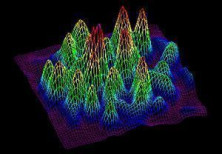
Beam Profile of Dental LED Curing Units Read Post »