Keep Cool: Avoiding Sensor Drift
Mark Slutzki explains the difference between real life and theory and how it all connects to the way you can avoid Sensor Drift…
Keep Cool: Avoiding Sensor Drift Read Post »
Mark Slutzki explains the difference between real life and theory and how it all connects to the way you can avoid Sensor Drift…
Keep Cool: Avoiding Sensor Drift Read Post »
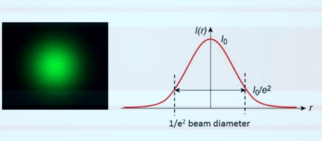
For maximum accuracy, how much of the sensor’s aperture should the beam ideally fill? This video will give you some
Laser Measurement Best Practices: How much of my sensor’s aperture should I fill? Read Post »
You might think – as I used do – that offset is pretty simple.
Before measuring your laser, see if the meter displays a value.
If not, great. If it does, that’s unwanted, so press “Offset.”
However, the truth is there are several different kinds of offset and it’s important to understand a little bit about how thermal sensors work in order to know when to hit that offset button and when to resist.
When to use Thermal Offset in Laser Power Measurement Read Post »
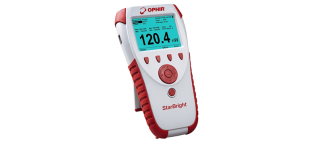
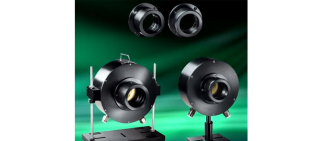
The new Ophir StarBright is the most advanced of Ophir’s family of handheld laser meters. This video walks you through the range of capabilities, and shows you how to use them.
How to Use the StarBright Laser Power Meter Read Post »
The new Ophir StarBright is the most advanced of Ophir’s family of handheld laser meters. This video walks you through the range of capabilities, and shows you how to use them.
Product Feature: How to Use the StarBright Meter Read Post »
It can be frustrating – trying to measure the power of a laser beam whose power keeps changing. In this video, part of our “Best Practices in Laser Measurement” series, you’ll learn how to get good readings even for unstable beams.
Best Practices in Laser Measurement: How to Measure an Unstable Laser Read Post »
When measuring very high power laser beams, even the few percent of the beam normally back-scattered from the sensor can be a problem. Ophir now offers Scatter Shields as accessories for our high power laser sensors; these can be mounted on the front flange of the sensors to reduce the backscatter by about 70%.
Scatter Shields: Reducing Back-Reflected Power from High Power Sensors Read Post »
Modern production facilities must constantly increase throughput, at less cost, with less scrap, and with minimum downtime. In this video overview, you will learn how application of new, advanced technology in measurement devices, can help both designers and users of industrial laser systems to optimize and control their processes, so they can accomplish these goals and achieve consistently good results – both in quality and quantity.
Laser Measurement Solutions for High Power Industrial Laser Applications Read Post »
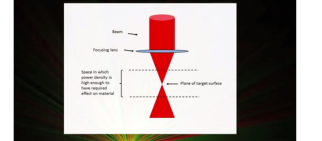
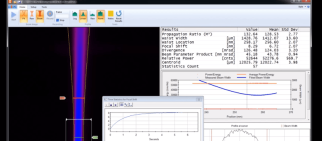
Measuring the focal spot of a high power laser is challenging, at best.
The main issue is that when a high power laser is focused down to a small point, the power density can be extremely high, typically high enough to damage any sort of measurement equipment you would use.
The solution?
Focus shift monitoring of high power lasers Read Post »
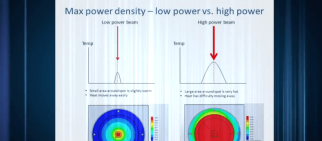
Does power density damage threshold really change with power? Shouldn’t it remain the same throughout the whole power range? In this video you’ll learn why the specified damage threshold does indeed depend on the power level, and not just on power density.
Does damage threshold depend on power level? Read Post »
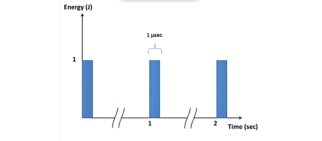
A pulsed laser could have an average power of, say, 1 Watt, yet a peak power of 1 Megawatt –
Peak power vs. Average Power What is it, and how do I measure it? Read Post »
In this video, you will learn how the BC20 sensor enables correct power measurement of scanned beams, as are used
Measuring Power of Scanned Laser Beams Read Post »