Authors

OphirBlog

193 posts

Avatar

How to Measure Optical Fiber Power and Energy

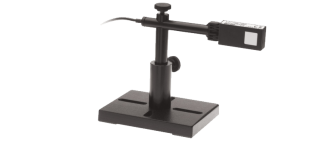
Not everyone knows this, but almost all Ophir power and energy sensors can be used with four standard fiber adapters:

SMA
FC
ST
SC
Of course, any fiber can be measured by an Ophir sensor by taking a free-space measurement – placing the fiber tip a few mm or cm from the sensor and letting the laser beam continue to the sensor.

However, in many cases it is convenient to use a fiber adapter to connect to a measuring device.

If that’s the case, here’s what you’ll want to do.

How to Measure Optical Fiber Power and Energy Read Post »

How Should You Measure Your Medical Laser:Hulk-Style or Spiderman-Style?

You medical laser needs periodic measurement to ensure it continues to operate at the desired output settings.

There are two ways to measure the internal laser of your medical device:

Hulk: large, thermal sensor to absorb the full laser power.
Spiderman: small sensor to sample the beam in-process.

As you might expect, each method comes with advantages and disadvantages.

How Should You Measure Your Medical Laser:Hulk-Style or Spiderman-Style? Read Post »

m2 squared laser beam quality.png

Q&A: M-Squared Laser Beam Quality

What’s M-Squared, again?

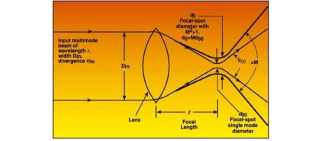
If you’re not familiar with M2 already, it basically sums up your laser beam quality in a single number.

M2 takes a look at your beam caustic (the curve of the laser beam as it focuses and diverges again) and compares this to an ideal Gaussian beam caustic.

So if your beam is perfectly Gaussian, you’ll get M2 = 1. For high quality beams, M2 might be 1.1 or 1.2, for lower qualities you can get up to 3, 4 and even double digits for some low quality high power lasers.

So, how do you know what the M2 of your laser beam really is?

Q&A: M-Squared Laser Beam Quality Read Post »

The Top Mistake Medical Device Engineers Make When Designing Laser Integration

We’ve all been there before.

Struggling to reduce the cost of the BOM, we try to do everything ourselves.

After all, you’re an engineer, aren’t you? You have your own staff of hardware and software engineers, mechanical engineers, physicists, and anyone else you might need.

So, if there’s a complex part that adds a significant cost to your BOM, you’ll try to cut corners. “Let’s see how we can design that ourselves,” you say…

The Top Mistake Medical Device Engineers Make When Designing Laser Integration Read Post »

Scroll to Top
Cookies & Privacy
This site uses cookies to help optimize your browsing experience.
RefusePrivacy PolicyAccept