



Meet the Team: Derrick Peterman Shares the Most Common Challenges in Laser Measurement
What do you enjoy doing outside of work? I’ve been a running competitively ever since I was twelve when my
Meet the Team: Derrick Peterman Shares the Most Common Challenges in Laser Measurement Read Post »
A Beginner’s Guide to Laser Beam Profiling
Let’s be honest.
We’d all just prefer that our lasers always worked exactly as they’re supposed to.
Who really wants to measure their laser, when they can just be using it instead?
However, like all processes, a laser must be controlled to be used efficiently, and it must be measured to be controlled (and used) properly.
A Beginner’s Guide to Laser Beam Profiling Read Post »
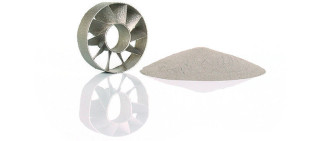
Additive Manufacturing: Maintaining Quality & Control
Additive manufacturing (AM) has exploded in the last few years. No longer just a tool for quick plastic prototypes, AM
Additive Manufacturing: Maintaining Quality & Control Read Post »

Laser Beam Optics Calculators
Explore five laser beam optics calculators that simplify tasks like power density, peak power, focus spot size, and aperture sizing for everyday laser work.
Laser Beam Optics Calculators Read Post »
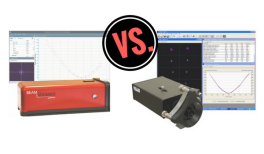
Can You Really Measure Laser Beam Quality (M Squared) in Real Time?
M-Squared is arguably the most important factor when determining the potential efficiency of your laser.
But, it can be a pain to measure. Here are 2 ways you can use that actually DON’T move the camera or the laser
Can You Really Measure Laser Beam Quality (M Squared) in Real Time? Read Post »
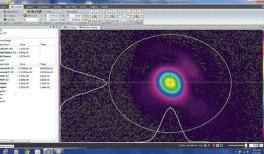
Measuring Really Small Laser Beams (< 10 microns)
Profiling small laser beams and measuring the beam size (or mode field diameter) can be a serious challenge. But it’s critical to measure, especially in such applications as fiber optic coupling efficiency, defect scanning, optical design and optical fabrication process control. Here’s how we suggest you do it
Measuring Really Small Laser Beams (< 10 microns) Read Post »
Recalibrating Your Laser Power Meter for Long-Term Accuracy and Reliability
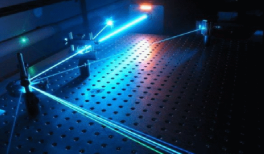
We’d all like to imagine that our things will stay in mint condition forever. But we know that’s not the case. Just like laser degrade (and therefore must be measured), the measurement equipment itself will slowly drift away from its precise calibration.
This is why we recommend yearly calibration. If you aren’t sure when your laser power or energy is due for recalibration, you can check by connecting it to a meter. If it needs to be recalibrated, a notification will pop up on the first screen.
Here’s how the recalibration process works.
Recalibrating Your Laser Power Meter for Long-Term Accuracy and Reliability Read Post »
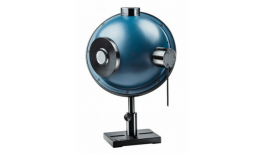
Integrating Spheres for Lighting and Laser Diode Measurement
An integrating sphere is a powerful tool to capture all the light of a widely divergent beam. The sphere scatters light uniformly over its whole interior.
Integrating Spheres for Lighting and Laser Diode Measurement Read Post »
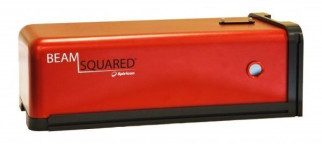
BeamSquared for Easy M² Measurement
This new video is a nice, short primer on Ophir-Spiricon’s new “BeamSquared,” replacing the M2-200s as the M-Squared measurement system
BeamSquared for Easy M² Measurement Read Post »
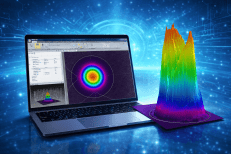
How to Calculate Laser Beam Size
Gaussian laser beams don’t have a clear‑cut width. This article explains how laser beam size is calculated using common definitions such as 1/e², FWHM, and D4σ.
How to Calculate Laser Beam Size Read Post »
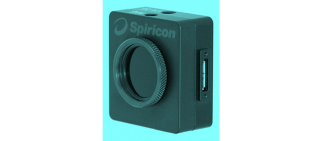
Using a Silicon Beam Profiler for UV Lasers?
Read this before before you do any damage.
Technically, silicon absorbs well down to 350 nm, and could even work at lower wavelengths (to 190 nm).
However,
Using a Silicon Beam Profiler for UV Lasers? Read Post »