PD300R-3W
PD300R-3W
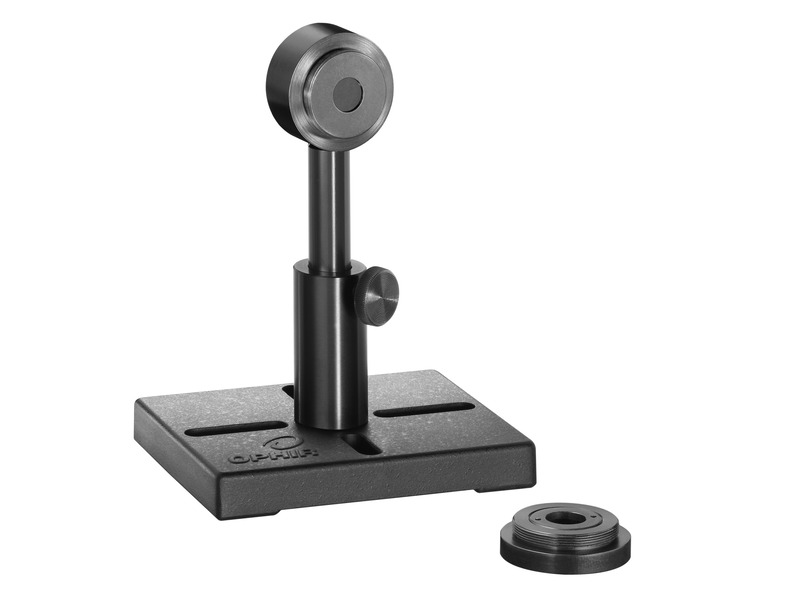
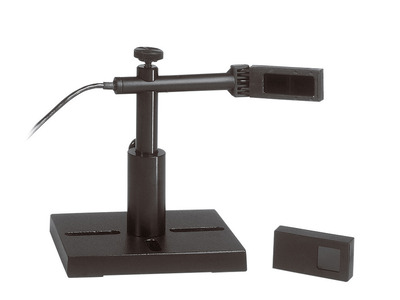
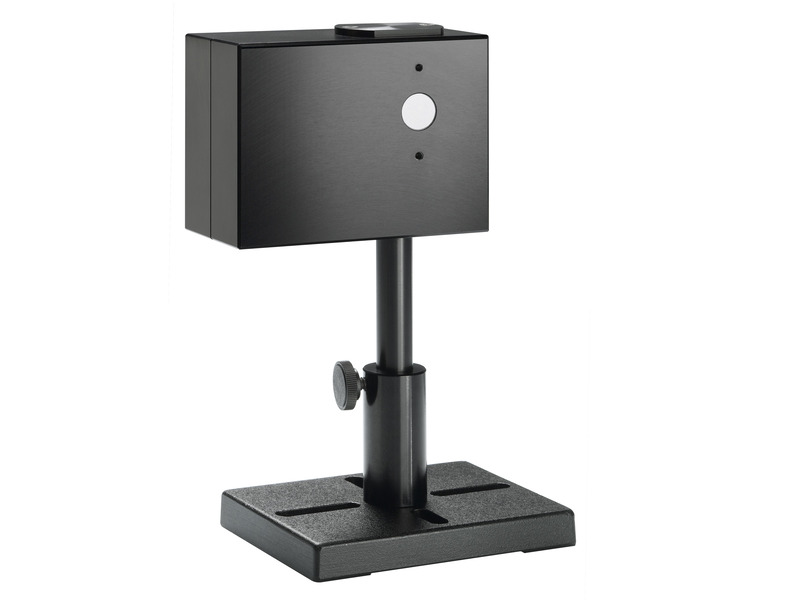
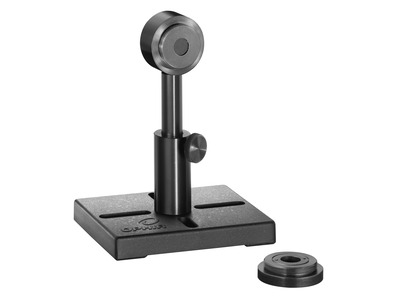
PD300R-3W — это круглый фотодиодный датчик для измерения лазера, способный измерять мощность до 3 Вт. Он имеет апертуру 10 мм и съемный фильтр. Без фильтра его спектральный диапазон: 350—1100 нм, а диапазон измерения мощности от 5 нВт до 100 мВт. С фильтром его спектральный диапазон: 430—1100 нм, а диапазон измерения мощности от 200 мкВт до 3 Вт. Датчик поставляется с 1,5-метровым кабелем для подключения к измерителю или интерфейсу компьютера.
- 350-1100 nm silicon photodiode sensor with Ø10 mm aperture
- 5 nW to 3000 mW power measurement range
- Includes removable filter
- Fiber optic adapters available Показать все функции
| Compare | Description | Drawings, CAD & Specs | Avail. | Price | ||
|---|---|---|---|---|---|---|
 | 7Z02437PD300R-3WPhotodiode Power Sensor, Silicon, 5 nW to 3 W, Ø10 mm, 350-1100 nm, Round | В наличии |
Характеристики
- Aperture SizeØ10 mm
- MaterialSilicon
- Spectral RangeFilter in: 430-1100 nm
Filter out: 350-1100 nm - Power RangeFilter in: 2 µW - 3 W
Filter out: 5 nW - 100 mW - Maximum Average Power DensityFilter in: 30 W/cm²
Filter out: 10 W/cm² - Maximum Pulse EnergyFilter in: 400 µJ
Filter out: 30 µJ
- Response Time0.2 s
- Cable Length1.5 m
- DimensionsØ35 x 24 mm
- CE ComplianceYes
- UKCA ComplianceYes
- China RoHS ComplianceYes
Функции
Measuring Very Low Laser Powers with a Photodiode Sensor
In this short “Basics” video, we review in general the use of photodiode sensors for measuring very low laser powers.
Effects of Incidence Angle on Measurements
In this video, you will learn to what degree a beam’s incidence angle matters, and for which sensor types this should be taken into account.
Часто задаваемые вопросы
- How do I take off the removable filter from the PD300?Ответ
Removing External Filter from PD300:
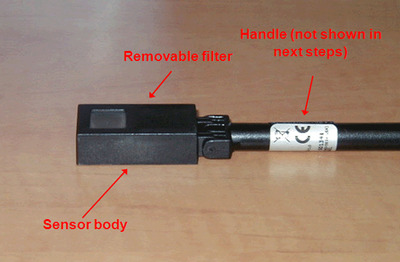
Step 1 – Starting position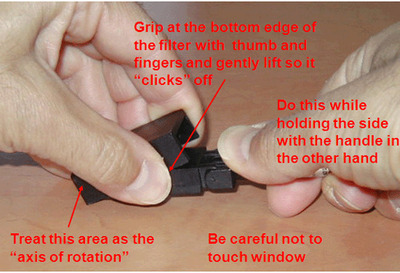
Step 2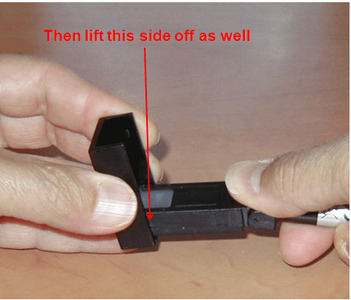
Step 3 - The total error when using a PD-300 head is listed as +/- 3%. Is that 3% of the reading or 3% of the total range?Ответ
It's +/-3% of the reading from full scale down to 5% of full scale. Below 5% of full scale one should switch to next range down for the best accurate linear results.
- What does the PD300 "Background Subtraction" do?Ответ
Ophir's Photodiode PD300 and PD300-1W sensors offer automatic background subtraction so the measurement is not sensitive to room light. With "filter out" (i.e. the external filter removed for low light measurements), 2 separate detector elements are visible. The beam to be measured is incident only on the outer of the 2 detectors, but background light reaches both detectors. The instrument will show the power measured by the outer detector minus that measured by the inner detector.This patented method cancels out 95% - 98% of background light under normal room conditions, even if it is constantly changing.
- Do I need to recalibrate my instrument? How often must it be recalibrated?Ответ
Unless otherwise indicated, Ophir sensors and meters should be recalibrated within 18 months after initial purchase, and then once a year after that.
- Can a lost PD300 filter be replaced?Ответ
Technically it could be replaced, but it is not just a matter of replacing the filter. Since the PD300 is a "calibrated" sensor it requires that the filter also be "calibrated". Especially since the PD300 response varies with wavelength, it requires that both the PD300 and the filter be calibrated over the entire spectral range with a monochromator. Because of the cost to calibrate the replacement filter with the PD300 sensor, we recommend purchasing a new PD300 sensor when a replacement filter is needed.
- Can I use a sensor from the PD300 family to measure average power of pulsed lasers?Ответ
In general yes, but several technical issues need to be kept in mind (most of which are results of the fast physical response time of these sensors):
- The pulse rate should be more than about 30Hz, otherwise the reading is unstable. At higher pulse frequencies, the sensor will respond as if the beam were CW.
- It is possible for a pulsed beam to have average power within the sensor spec and yet have the energy of the pulses themselves be high enough to cause a momentary saturation of the sensor. It is important to be sure that pulse energy is also within sensor spec (the parameter "Max pulse energy" is included in all specs for the PD300 family, for just this reason).
- The beam diameter should be no less than about 1mm .
- The average power and power density restriction in the spec should not be exceeded
Note: At the maximum pulse energy limit given in the spec, the reading will be saturated by about 5%, i.e. the reading will be about 5% lower than it should be. At 1/3 the maximum, the saturation will be about 1%.
Аксессуары
Customers that purchase the above items also consider the following items. Ophir-Spiricon meters and sensors include a standard manufacturers warranty for one year. Add a one year Extended Warranty to your meter or sensor, which includes one recalibration.
| Compare | Description | Drawings, CAD & Specs | Avail. | Price | ||
|---|---|---|---|---|---|---|
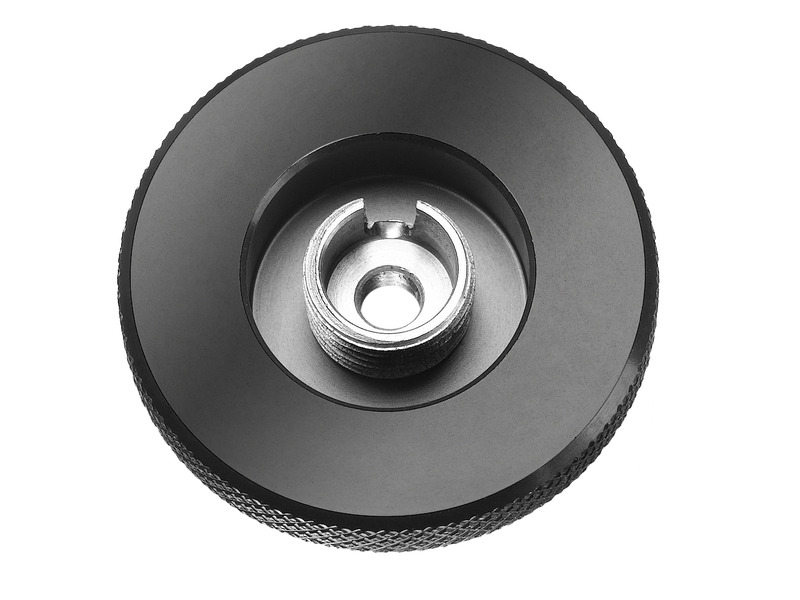 | 7Z08229FC Fiber Connector Adapter, Power and Energy Sensors | В наличии | ||||
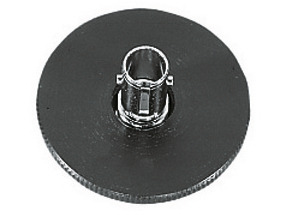 | 7Z08226ST Fiber Connector Adapter, Power and Energy Sensors | В наличии | ||||
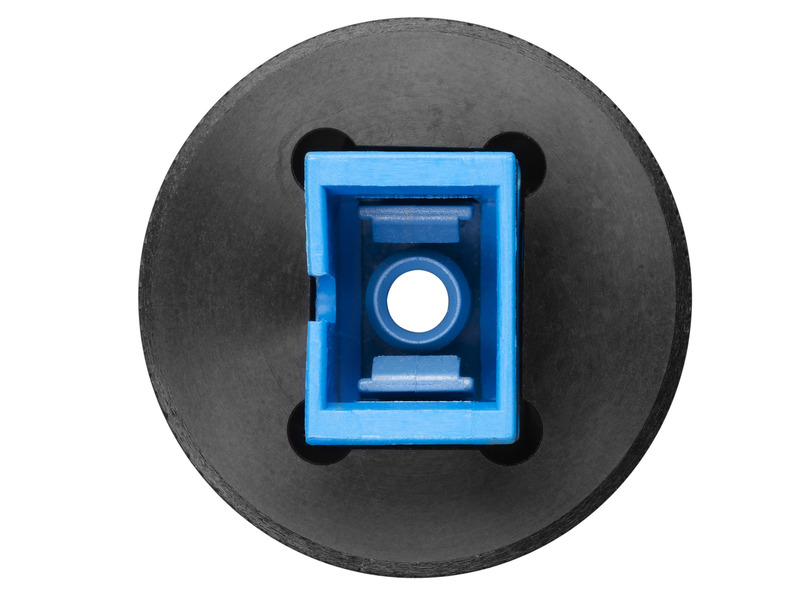 | 7Z08227SC Fiber Connector Adapter, Power and Energy Sensors | В наличии | ||||
 | 1G01236ASMA Fiber Connector Adapter, Power and Energy Sensors | В наличии | ||||
 | 1G02259Mounting Bracket, Fiber Adapter | В наличии | ||||
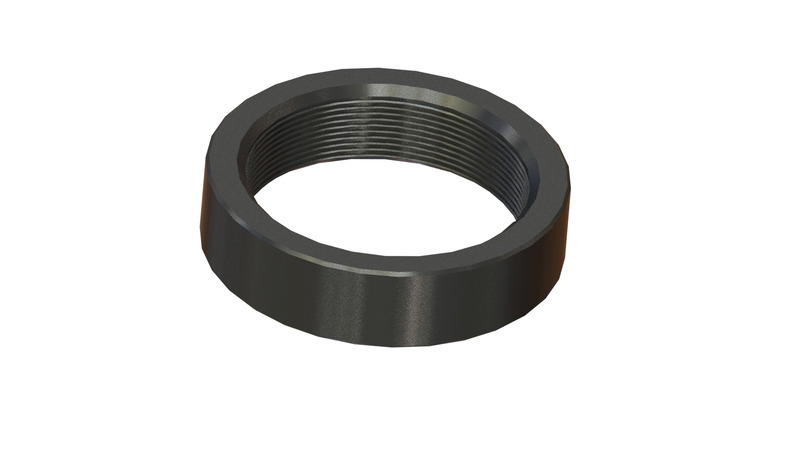 | 1G02260Female SM1 to SM1 Adapter | В наличии | ||||
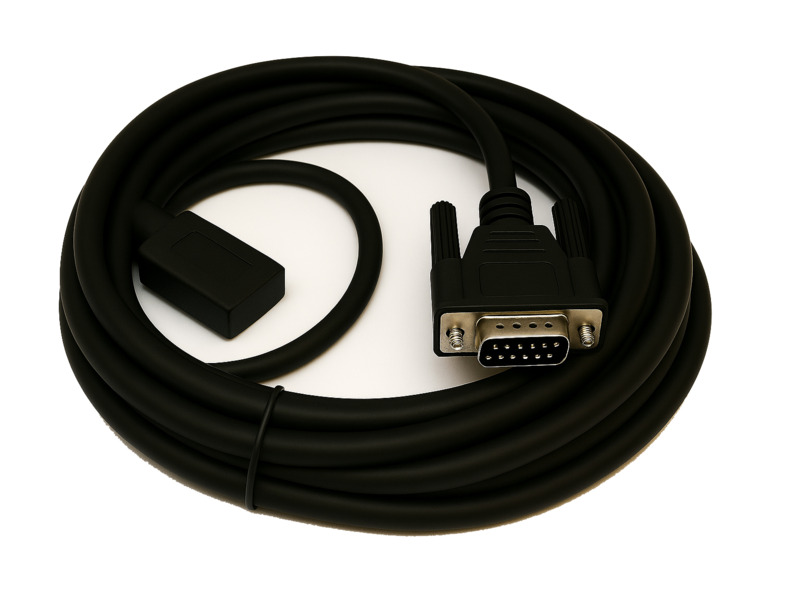 | 7E01125AOptical Sensor Cable, 5 m Length | |||||
| 7E01125BOptical Sensor Cable, 10 m Length | |||||
 | XWAR-SENSORExtended Warranty for Sensor |
Ресурсы
Data Sheets
Round Photodiode Sensors 20pW to 3W Datasheet(383 kB, PDF)
Catalogs
Power Sensors Catalog(11.2 MB, PDF) Laser Power & Energy Measurement and Laser Beam Analysis Catalog(27.5 MB, PDF)
Drawings & CAD
PD300R Drawing(184.7 kB, PDF)
Videos
Technical Notes
5 Situations Where Laser Performance Measurement is Necessary Effect of Ambient Conditions on Laser Measurements How do I know what range, or scale, to set my power/energy meter to? Measuring Average Power of Pulsed Lasers with Photodiodes(114.5 kB, PDF) How to Properly Select a Laser Power or Energy Sensor