申し訳ありませんが、この製品は販売終了となりました。
リソース & ダウンロード
データシート
フォトダイオード採用・特殊センサーデータシート(720.2 kB, PDF)
カタログ
レーザーパワー&エネルギーセンサー製品カタログ(37.1 MB, PDF) レーザーパワー & エネルギーメーター、レーザービームプロファイラーカタログ(英語版)(27.5 MB, PDF)
図面&CAD
PD300-CIE図面(117.3 kB, PDF)
ビデオ
超低出力パルスレーザービームのパワー測定方法(3:48) 超低出力測定用フォトダイオードセンサー(2:41)
関連製品
Q: Can I use a sensor from the PD300 family to measure average power of pulsed lasers?
A: In general yes, but several technical issues need to be kept in mind (most of which are results of the fast physical response time of these sensors):
- The pulse rate should be more than about 30Hz, otherwise the reading is unstable. At higher pulse frequencies, the sensor will respond as if the beam were CW.
- It is possible for a pulsed beam to have average power within the sensor spec and yet have the energy of the pulses themselves be high enough to cause a momentary saturation of the sensor. It is important to be sure that pulse energy is also within sensor spec (the parameter "Max pulse energy" is included in all specs for the PD300 family, for just this reason).
- The beam diameter should be no less than about 1mm .
- The average power and power density restriction in the spec should not be exceeded
Note: At the maximum pulse energy limit given in the spec, the reading will be saturated by about 5%, i.e. the reading will be about 5% lower than it should be. At 1/3 the maximum, the saturation will be about 1%.
Q: Do I need to recalibrate my instrument? How often must it be recalibrated?
A: Unless otherwise indicated, Ophir sensors and meters should be recalibrated within 18 months after initial purchase, and then once a year after that.
上記のセンサーに対応するアクセサリーを各種ご用意しております。
| 比較 | モデル | 図面、CAD、仕様 | 在庫状況 | 価格 | ||
|---|---|---|---|---|---|---|
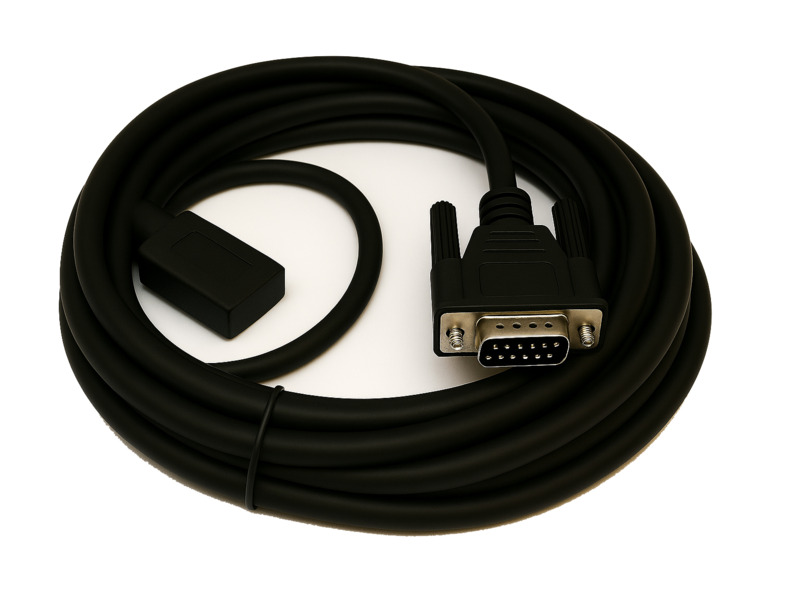 | 7E01125A5 m PD300 Sensor Cable光学センサー 5mケーブル (PD300センサーをパワーメーターに接続) | |||||
| 7E01125B10 m PD300 Sensor Cable光学センサー 10mケーブル (PD300センサーをパワーメーターに接続) | |||||
 | XWAR-SENSORセンサーの延長保証 |