リソース & ダウンロード
データシート
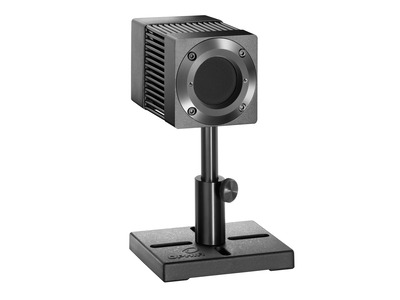
中出力 - 高出力ファン空冷サーマルセンサーデータシート
(パワーレンジ:100mW-250W)(638.7 kB, PDF)
カタログ
レーザーパワー&エネルギーセンサー製品カタログ(37.1 MB, PDF) レーザーパワー & エネルギーメーター、レーザービームプロファイラーカタログ(英語版)(27.5 MB, PDF)
図面&CAD
FL250A-LP2-35図面(246.7 kB, PDF)
関連製品
Q: I see Ophir has released some new thermal sensors with an absorber called “LP2”. What is it?
A: The new “LP2” type sensors are specially designed for beams having high power and high power density (and for pulsed beams, high energy density). The LP2 sensors are replacing the equivalent LP1 sensors; as impressive as the LP1 is, the LP2 was developed with the following improvements:
- Very high damage threshold, for both power density and energy density, for long pulse and CW beams;
- Spectrally flat; since its absorption remains constant at widely differing wavelengths, this means that sensors based on the LP2 can be used for "white light" or polychromatic beams;
- Very high level of absorption (as high as 96%, depending on wavelength), meaning much less light is scattered back, which for high power beams is an important benefit;
- The absorption is also largely independent of incident angle, which means it can be used for divergent beams too.
Check out the technical notes High Damage Threshold Absorbers LP2 vs. LP1.
Q: How do I select the correct wavelength with sensors that have a continual response curve such as silicon photodiode sensors, -LP1/LP2 thermal sensors and 3A-IS sensors?
A: The sensors with a continual response curve such as the ones listed above come with preset "favorite" wavelengths. If these "favorite" wavelengths do not match the application wavelength you are using they can be changed by performing the instructions below, which are for the Vega meter. For your specific meter, please see the User Manual.
- While the Vega is off, plug in the head. Switch on the Vega.
- From the main measurement screen, press "Laser" to select the correct laser wavelength. If you want to save this new wavelength as the startup default, press "Save" before exiting. If the wavelength you want is not among the wavelengths in the six wavelengths listed and you want to change or add a wavelength, see the next step
- Changing Chosen Wavelengths:
- From the power measurement screen select "Laser" and enter. Move to the wavelength you wish to change or add. Press the right navigation key.
- Using the up/down keys to change each number and the right/left keys to move to the next number, key in the desired wavelength. Press the Enter key to exit. If you wish to save this new wavelength as one of the 6 favorite wavelengths, press "Save".
Note: Saving the new wavelength in the Modify screen will not set this wavelength as the default startup wavelength. To do so, you must follow the instructions in Step 2 above.
Q: For measuring high average powers, you need to use a high average power sensor (read: big, heavy, water-cooled, expensive). Right?
A: It is partly right. Ophir has for many years had a few sensors that are designed for intermittent use. They are marked by two numbers like 50(150), which means it can measure 50 W continuously, or 150 W for a brief exposure (1.5 minutes in this example). Keeping in mind that power is energy over time, and that it is the total energy absorbed over time that causes a sensor to heat up, it should be possible to expose a sensor to “too high” power but only for a short time, and have the sensor survive the experience. The sensor can treat that short exposure as if it were just one long “single shot” pulse, and measure the energy of that pulse. Divide the energy by the (known) pulse width, and that gives the power during the pulse. (It can’t measure power directly this way, though, since a thermal sensor’s response time to power is itself a few seconds). For example, the moderate-power L40(250)A-LP2-50 has a 10KJ energy scale (several other sensors also have multi kJ scales); to measure power of an 8KW beam, we can fire the laser for 0.5 seconds with the sensor in energy mode, and we’ll measure 4KJ energy in the “pulse”. Dividing that by 0.5 seconds gives the 8KW beam power. Of course we then need to wait for the sensor to cool before repeating, but in some applications that may be perfectly OK. If you have a Juno, Juno+, Centauri or StarBright meter, you can do the above automatically, with any power sensor, using StarBright’s “Pulsed Power” function where you input the pulse duration and the meter will give the readout directly in power.
Q: How should I clean my sensor?
A: First, clean the absorber surface with a tissue, using Umicore #2 Substrate Cleaner, acetone or methanol. Then dry the surface with another tissue. Please note that a few absorbers (Pyro-BB, 10K-W, 15K-W, 16K-W and 30K-W) cannot be cleaned with this method. Instead, simply blow off the dust with clean air or nitrogen. Don't touch these absorbers. Also, HE sensors (such as the 30(150)A-HE-17) should not be cleaned with acetone.
Note: These suggestions are made without guarantee. The cleaning process may result in scratching or staining of the surface in some cases and may also change the calibration.
Q: Must I use a particular sensor only with the meter it was ordered with?
A: Ophir meters and sensors are calibrated independently. Each meter has the same sensitivity as the other within about 2 tenths of a percent. Each sensor is calibrated independently of a particular meter with its calibration information contained in the DB15 plug. When the sensor is connected to the meter, the meter reads and interprets this information. Since the accuracy of our sensors is typically +/-3%, the extra 0.2% error that could come from plugging into a different meter is negligible and therefore it does not matter which calibrated meter we use with a particular calibrated sensor.
Q: When an accuracy spec is given, what exactly is meant?
A: The Ophir specification on accuracy is in general 2 sigma standard deviation. This means, for instance, that if we list the accuracy as +/-3%, this means that 95% of the sensors will be within this accuracy and 99% will be within +/-4%. For further information on accuracy see Ophir Power/Energy Meter Calibration Procedure and Traceability/Error Analysis and our Knowledge Center.
Q: Does the damage threshold depend on power level?
A: The damage threshold of thermal sensors does depend on the power level and not only the power density because the sensor disc itself gets hotter at high powers. For instance, the damage threshold of the Ophir broadband coating may be 50 KW/cm2 at 10 Watts but only 10 KW/cm2 at 300 W. The Ophir specifications for damage threshold are always given for the highest power of use of a particular sensor, something which is not done by most other manufacturers. This should be taken into account when comparing specifications. The Sensor Finder takes the power level into consideration when calculating damage threshold. For further information, check out our 'FAQ: Does damage threshold depend on power level?' video.
Q: Ophir thermal sensors have pin fins for cooling. They used to be cooled by flat fins. What's the difference?
A: Pin fins can cool the same laser power to a lower temperature or take higher power in the same size sensor. Take the FL250A sensor, for example, used with a 250 W laser: The old version would reach 74°C at maximum power, while the new only reaches 55°C.
Q: Can a laser measurement depend on the distance from the laser to the sensor?
A: In theory, if a beam is completely parallel and fits within the aperture of a sensor, then it should make no difference at all what the distance is; it will be the same number of photons (ignoring absorption by the air, which is negligible except in the UV below 250nm). If, nevertheless, you do see such a distance dependence, there could be one of the following effects happening:
- If you are using a thermal type power sensor, you might actually be measuring heat from the laser itself; when very close to the laser, the thermal sensor might be “feeling” the laser’s own heat. That would not, however, continue to have an effect at more than a few cm distance unless the light source is weak and the heat source is strong.
- Beam geometry – The beam may not be parallel and may be diverging. Often, the lower intensity wings of the beam have greater divergence rate than the main portion of the beam. These may be missing the sensor's aperture as the distance increases. To check that you'd need to use a profiler, or perhaps a BeamTrack PPS (Power/Position/Size) sensor.
- If you are measuring pulse energies with a diffuser-based pyroelectric sensor: Some users find that when they start with the sensor right up close to the laser and move it away, the readings drop sharply (typically by some 6%) over the first few cm. This is likely caused by multiple reflections between the diffuser and the laser device, which at the closest distance might be causing an incorrectly high reading. You should back off from the source by at least some 5cm, more if the beam is not too divergent.
Needless to say, it’s also important to be sure to have a steady setup; a sensor held by hand could easily be moved around involuntarily, which could cause partial or complete missing of the sensor’s aperture at increasing distance, particularly for an invisible beam.
Q: How is the performance of thermal sensors affected by ambient temperature?
A: Water cooled sensors will hardly be affected by ambient temperature since the sensor temperature is determined by the water temperature.
Ophir convection and fan cooled sensors are designed to operate in an ambient environment of 25°C up to the maximum rated power continuously.
When operating at its maximum rated power, the sensor’s body should typically not exceed about 80°C in temperature.
Note: If the room temperature is higher than 25°C, then the maximum power (at which the sensor can be safely operated) should be derated accordingly from the specified maximum (since dissipation of the heat from inside the sensor to the surrounding air will be more difficult). For example, if the room temperature is 35°C, then the maximum power limit should be (80-35)/(80-25) = 82% of maximum rated power as given in the sensor’s spec.
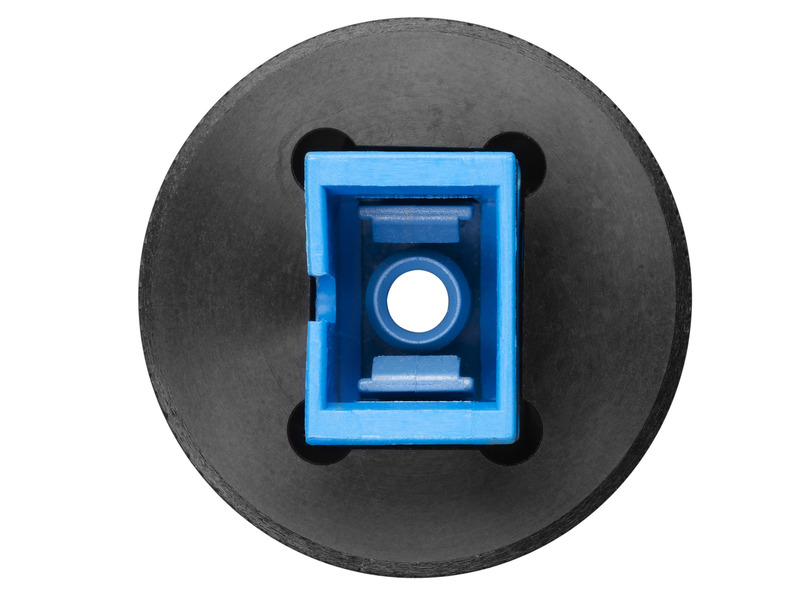
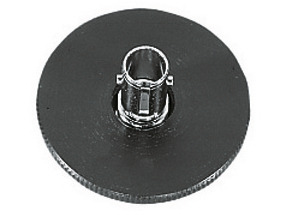
ファイバーコネクターアダプター
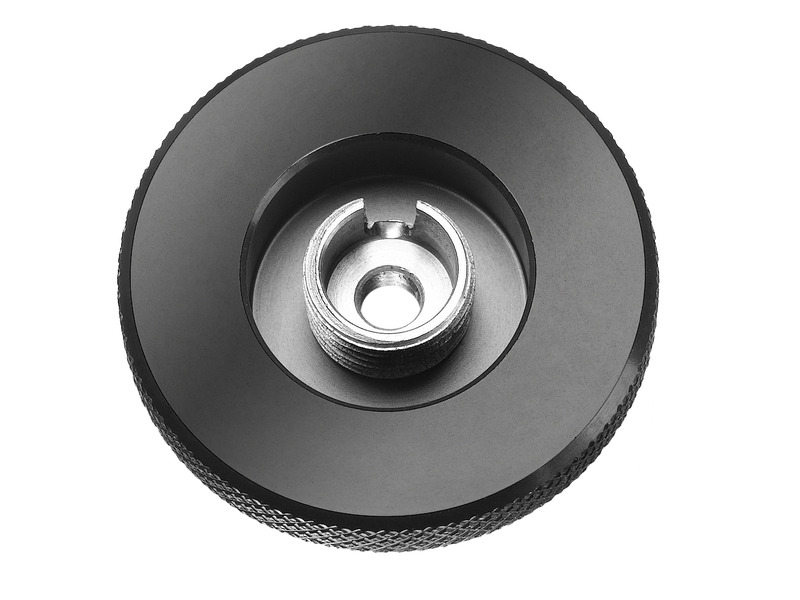
ファイバーアダプター取り付けブラケット
| 比較 | モデル | 図面、CAD、仕様 | 在庫状況 | 価格 | ||
|---|---|---|---|---|---|---|
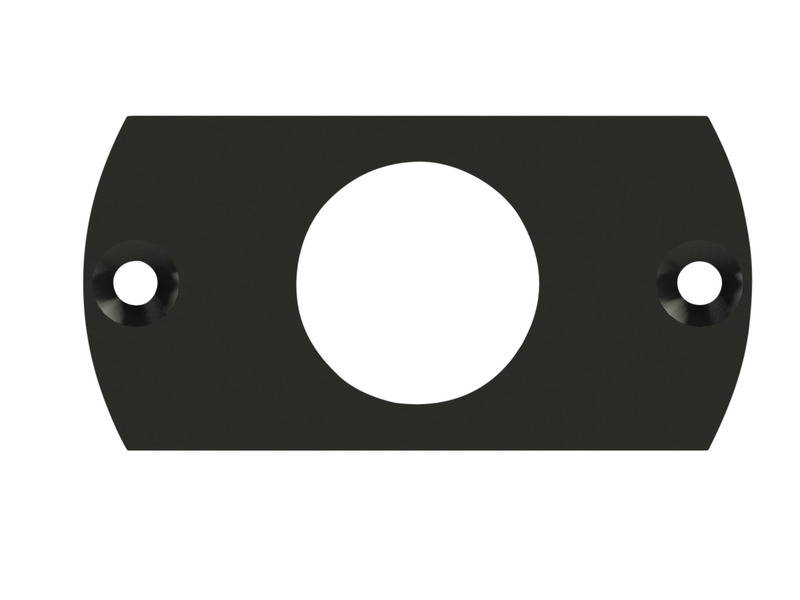 | 7Z08265ファイバーアダプター取り付けブラケット L50、FL250サーマルセンサー用 | 在庫あり |
N極 電源、充電器
| 比較 | モデル | 図面、CAD、仕様 | 在庫状況 | 価格 | ||
|---|---|---|---|---|---|---|
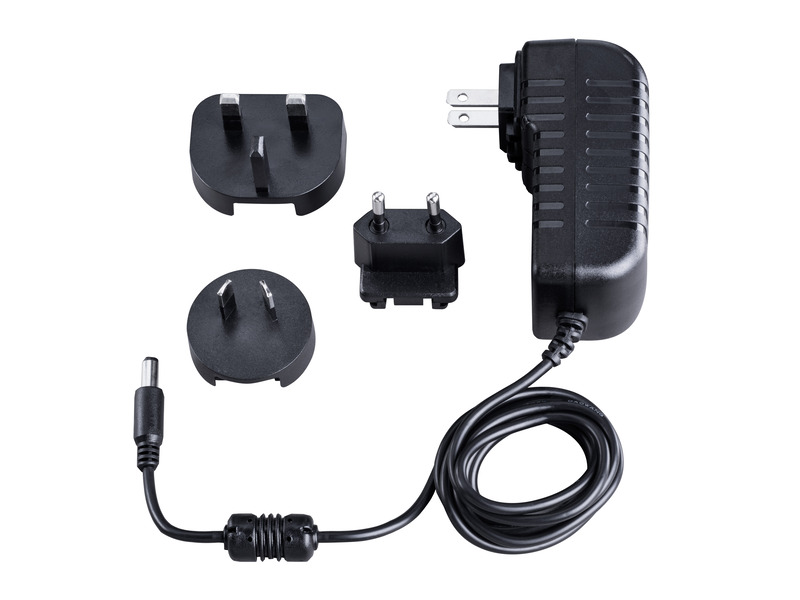 | 7E05029N極性電源/充電器充電器(N極)充電器AC/DC 12V 2A N-2.1x5.5(製品に1ヶ標準付属) | 3 Weeks |


センサーの延長保証
上記製品をご購入されたお客様には、以下のオプションも併せてご検討いただいております。Ophirのディスプレイおよびセンサーには、標準で1 年間のメーカー保証が含まれています。ディスプレイまたはセンサーに1年間の延長保証を追加することができ、延長保証には1回分の再校正サービスが含まれます。
| 比較 | モデル | 図面、CAD、仕様 | 在庫状況 | 価格 | ||
|---|---|---|---|---|---|---|
 | XWAR-SENSORセンサーの延長保証 |