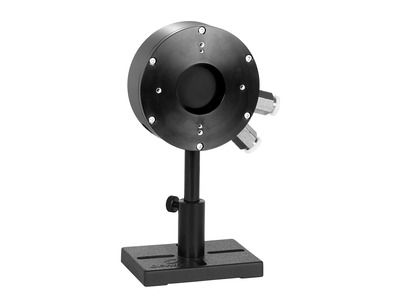
リソース & ダウンロード
データシート
高出力水冷サーマルセンサーデータシート(パワーレンジ:5W-1000W)(658.3 kB, PDF)
カタログ
レーザーパワー&エネルギーセンサー製品カタログ(37.1 MB, PDF) レーザーパワー & エネルギーメーター、レーザービームプロファイラーカタログ(英語版)(27.5 MB, PDF)
図面&CAD
1000W-LP2-34図面(286.3 kB, PDF)
関連製品
Q: I see Ophir has released some new thermal sensors with an absorber called “LP2”. What is it?
A: The new “LP2” type sensors are specially designed for beams having high power and high power density (and for pulsed beams, high energy density). The LP2 sensors are replacing the equivalent LP1 sensors; as impressive as the LP1 is, the LP2 was developed with the following improvements:
- Very high damage threshold, for both power density and energy density, for long pulse and CW beams;
- Spectrally flat; since its absorption remains constant at widely differing wavelengths, this means that sensors based on the LP2 can be used for "white light" or polychromatic beams;
- Very high level of absorption (as high as 96%, depending on wavelength), meaning much less light is scattered back, which for high power beams is an important benefit;
- The absorption is also largely independent of incident angle, which means it can be used for divergent beams too.
Check out the technical notes High Damage Threshold Absorbers LP2 vs. LP1.
Q: Can a laser measurement depend on the distance from the laser to the sensor?
A: In theory, if a beam is completely parallel and fits within the aperture of a sensor, then it should make no difference at all what the distance is; it will be the same number of photons (ignoring absorption by the air, which is negligible except in the UV below 250nm). If, nevertheless, you do see such a distance dependence, there could be one of the following effects happening:
- If you are using a thermal type power sensor, you might actually be measuring heat from the laser itself; when very close to the laser, the thermal sensor might be “feeling” the laser’s own heat. That would not, however, continue to have an effect at more than a few cm distance unless the light source is weak and the heat source is strong.
- Beam geometry – The beam may not be parallel and may be diverging. Often, the lower intensity wings of the beam have greater divergence rate than the main portion of the beam. These may be missing the sensor's aperture as the distance increases. To check that you'd need to use a profiler, or perhaps a BeamTrack PPS (Power/Position/Size) sensor.
- If you are measuring pulse energies with a diffuser-based pyroelectric sensor: Some users find that when they start with the sensor right up close to the laser and move it away, the readings drop sharply (typically by some 6%) over the first few cm. This is likely caused by multiple reflections between the diffuser and the laser device, which at the closest distance might be causing an incorrectly high reading. You should back off from the source by at least some 5cm, more if the beam is not too divergent.
Needless to say, it’s also important to be sure to have a steady setup; a sensor held by hand could easily be moved around involuntarily, which could cause partial or complete missing of the sensor’s aperture at increasing distance, particularly for an invisible beam.
Q: Once and for all: Is deionized (DI) water good or bad for water-cooled sensors? Does it help prevent corrosion, or does it actually increase the risk?
A: Many factors affect the risk of corrosion forming, but the two most important are:
- the mixture of ions in the water
- the water’s pH
Our current recommendation is to use DI water – but of a neutral pH. DI water is usually slightly acidic; it can be titrated to a neutral pH, using a bit of sodium hydroxide for example. There are also commercial additives that can help prevent corrosion, for instance Optishield Plus.
Q: What is the best water to use in the Water Cooled Sensors?
A: Corrosion is caused by interactions between the metallic components of the sensor and the cooling water, which may contain a variety of dissolved ions. Many factors affect the risk of corrosion forming, but the most important are the pH and the mixture of ions in the water. For this reason, we recommend using neutral deionized water in a closed circulating system (pH between 6 and 8). Please note that deionized water is usually slightly acidic (pH 5.65) due to absorption of CO2 from the atmosphere. The cooling water can be neutralized by adding 5 ml of a 10 mM solution of NaOH for each liter of water in the cooling system. Commercial additives such as Optishield Plus are also recommended for systems such as ours that have copper and aluminum in them. Optishield has the additional benefit of having biocide to prevent buildup of organic contamination.
To prevent corrosion it is also crucial to not allow standing water to evaporate inside the sensor when it is not in use. When disconnecting a sensor from the cooling system, the water channel should be cleared by blowing compressed air through it.
For those customers still experiencing problems with corrosion, we recommend the new thermal sensor 1000WP-BB-34 which has a special design in which all materials that come into contact with the cooling water are either copper or nonmetallic.
Q: The sensor I need uses water cooling. Can you recommend a water cooling system?
A: We don’t supply chillers, nor insist on specific models; the only important thing from our point of view is to simply keep to the requirements specified for the cooling water of the specific model of sensor, such as minimum flow rate at full power, water temperature range, and - more important than the actual water temperature - water temperature stability. The temperature of the water should not be changing by more than 1 deg/min (because changes in water temperature could cause heat flow in the sensor which would be detected as if it were laser power, and cause errors in the reading).
Q: Is there a coolant pressure specification for Ophir water-cooled sensors?
A: Yes. Please check out the discussion of coolant pressure requirements at How to use water cooled Ophir sensors.
10K-W 水冷センサー用保護カバー
| 比較 | モデル | 図面、CAD、仕様 | 在庫状況 | 価格 | ||
|---|---|---|---|---|---|---|
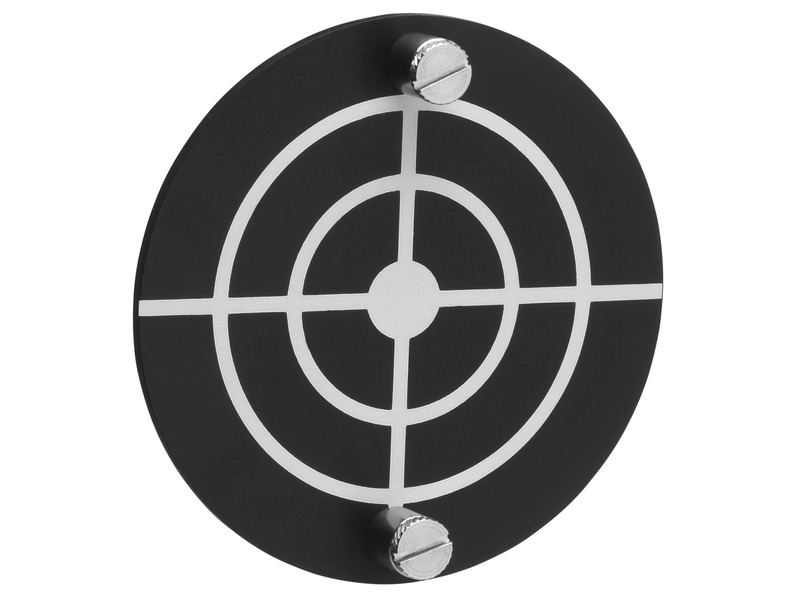 | 1G0133210K-W保護カバー保護カバー 15K-W、10K-W、5000W、L1500W、1000Wセンサー用 | 在庫あり |
メトリック水冷継手
| 比較 | モデル | 図面、CAD、仕様 | 在庫状況 | 価格 | ||
|---|---|---|---|---|---|---|
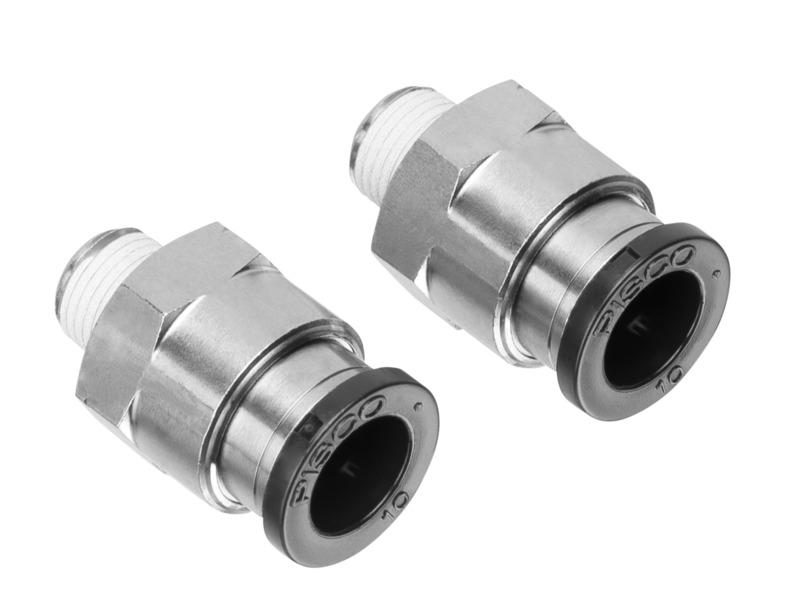 | 7Z08353標準メトリック水冷継手10mmメトリック水冷継手 水冷センサー用 | 5 Weeks |


センサーの延長保証
上記製品をご購入されたお客様には、以下のオプションも併せてご検討いただいております。Ophirのディスプレイおよびセンサーには、標準で1 年間のメーカー保証が含まれています。ディスプレイまたはセンサーに1年間の延長保証を追加することができ、延長保証には1回分の再校正サービスが含まれます。
| 比較 | モデル | 図面、CAD、仕様 | 在庫状況 | 価格 | ||
|---|---|---|---|---|---|---|
 | XWAR-SENSORセンサーの延長保証 |