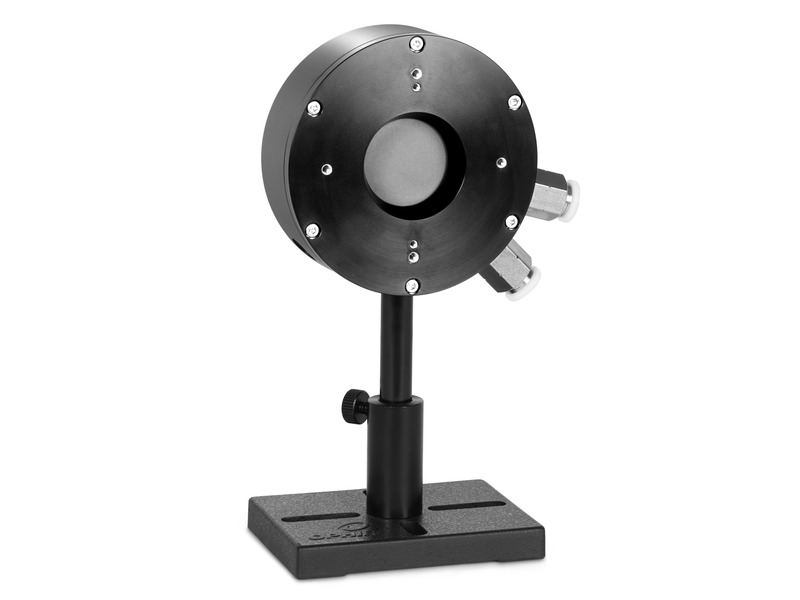
Leider ist diese Produktfamilie nicht mehr verfügbar.
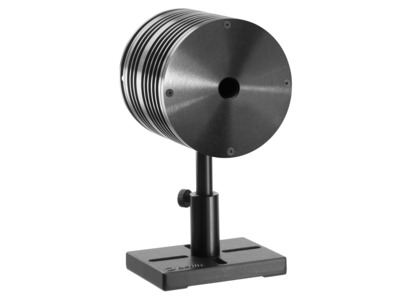
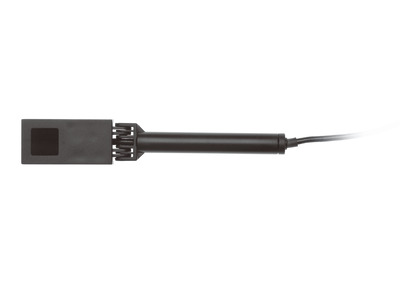
BT50A-15 50 W Laserstrahlfalle
BT50A-15 50 W Laserstrahlfalle
Der BT50A-15 ist eine konvektionsgekühlte Strahlfalle mit einer 15mm Aperture für bis zu 50 W. Sie hält Leistungsdichten bis 16kW/cm² bei voller Leistung stand und hat einen Spektralbereich von 0,19 bis 20 µm. Die Leistung der Rückstreuung liegt niedriger als 0.05%.
- Laserstrahlfalle für bis zu 50 W
- Konvektionsgekühlt
- Apertur mit 15 mm Durchmesser Alle Funktionen anzeigen
Spezifikationen
- Product NameBT50A-15
- Aperture SizeØ15 mm
- Spectral Range0.19-20 µm
- Maximum Average Power50 W
- Backscattered Power0.05% or less, typical
- Maximum Average Power Density16 kW/cm²
- Maximum Energy Density <100 ns4 J/cm²
- Maximum Energy Density 2 ms100 J/cm²
- CoolingConvection
- DimensionsØ100 x 100 mm
- CE ComplianceNo
- UKCA ComplianceYes
- China RoHS ComplianceYes
Funktionen
Laser Beam Dumps
Beam Dumps are used to safely absorb the unused part of a laser beam, protecting nearby personnel and equipment. In this video you will learn about Ophir's range of Beam Dump solutions for various power levels.
Häufig gestellte Fragen
- Does the damage threshold depend on power level?Antwort
The damage threshold of thermal sensors does depend on the power level and not only the power density because the sensor disc itself gets hotter at high powers. For instance, the damage threshold of the Ophir broadband coating may be 50KW/cm2 at 10 Watts but only 10KW/cm2 at 300W. The Ophir specifications for damage threshold are always given for the highest power of use of a particular sensor, something which is not done by most other manufacturers. This should be taken into account when comparing specifications. The Sensor Finder takes the power level into consideration when calculating damage threshold.
- What is the damage threshold of the thermal broadband coating and how does it compare with claims of other manufacturers?Antwort
We publish a nominal damage threshold for most of our thermal BB sensors as 20 KW/cm2. Other manufacturers may quote higher numbers than this. In actuality, in one to one tests against competitors, our sensors show a higher damage threshold but the actual damage threshold depends on the total power as well as the power density. For very low powers such as 30 W, the damage threshold can be as high as 50 KW/cm2 and at high powers such as 5 KW, it drops to 3 KW/cm2. The Ophir sensor finder program takes account of these variations in its calculations.
- How should I clean my sensor?Antwort
First, clean the absorber surface with a tissue, using Umicore #2 Substrate Cleaner, acetone or methanol. Then dry the surface with another tissue. Please note that a few absorbers (Pyro-BB, 10K-W, 15K-W, 16K-W and 30K-W) cannot be cleaned with this method. Instead, simply blow off the dust with clean air or nitrogen. Don't touch these absorbers. Also, HE sensors (such as the 30(150)A-HE-17) should not be cleaned with acetone.
Note: These suggestions are made without guarantee. The cleaning process may result in scratching or staining of the surface in some cases and may also change the calibration. - Do I need to recalibrate my instrument? How often must it be recalibrated?Antwort
Unless otherwise indicated, Ophir sensors and meters should be recalibrated within 18 months after initial purchase, and then once a year after that.
- Can a laser measurement depend on the distance from the laser to the sensor?Antwort
In theory, if a beam is completely parallel and fits within the aperture of a sensor, then it should make no difference at all what the distance is. It will be the same number of photons (ignoring absorption by the air, which is negligible except in the UV below 250nm). If, nevertheless, you do see such a distance dependence, there could be one of the following effects happening:
- If you are using a thermal type power sensor, you might actually be measuring heat from the laser itself. When very close to the laser, the thermal sensor might be “feeling” the laser’s own heat. That would not, however, continue to have an effect at more than a few cm distance unless the light source is weak and the heat source is strong.
- Beam geometry – The beam may not be parallel and may be diverging. Often, the lower intensity wings of the beam have greater divergence rate than the main portion of the beam. These may be missing the sensor's aperture as the distance increases. To check that you'd need to use a profiler, or perhaps a BeamTrack PPS (Power/Position/Size) sensor.
- If you are measuring pulse energies with a diffuser-based pyroelectric sensor: Some users find that when they start with the sensor right up close to the laser and move it away, the readings drop sharply (typically by some 6%) over the first few cm. This is likely caused by multiple reflections between the diffuser and the laser device, which at the closest distance might be causing an incorrectly high reading. You should back off from the source by at least some 5cm, more if the beam is not too divergent.
Needless to say, it’s also important to be sure to have a steady setup. A sensor held by hand could easily be moved around involuntarily, which could cause partial or complete missing of the sensor’s aperture at increasing distance, particularly for an invisible beam.
Ressourcen
Data Sheets
Low Power Thermal Sensors Beam Trap Datasheet(146.3 kB, PDF)
Drawings & CAD
BT50A-15 Drawing(135.8 kB, PDF)
Catalogs
Power Sensors Catalog(11.2 MB, PDF) Laser Power & Energy Measurement and Laser Beam Analysis Catalog(27.5 MB, PDF)